' fill='%23cc0935'/%3E%3C/svg%3E)

' fill='%23cc0935'/%3E%3C/svg%3E)
'%3E%3Cg id='Group_1' data-name='Group 1' transform='translate(838.16 96.811)'%3E%3Cpath id='Path_1' data-name='Path 1' d='M13.382.347l-.563,7.2q-.709,8.68-1.336,19.87Q10.847,16.343,9.354.347H.8L5.482,39.063H17.81L21.94.347Zm9.927,38.716h8.115V.347H23.309V39.063Zm11.373,0h14.07V31.314H42.8V22.8h5.07V15.436H42.8V8.095h5.417V.347H34.682ZM73.752.347q-1.6,13.708-2.265,27.5l-.9-14.732Q69.872,2.045,69.706.346H61.28q-1.794,16.432-2.243,26.568l-.829-13.06L57.351.346H49.466L53.1,39.062H63.173q1.779-15.424,2.263-20.3,1.065,11.381,2.455,20.3H78.023L81.636.347H73.754Z' transform='translate(-0.796 -0.346)' fill='%231d1d1b' fill-rule='evenodd'/%3E%3C/g%3E%3Cpath id='Path_2' data-name='Path 2' d='M220.325,39.526h9.387q4.894,0,6.476-.693a4.349,4.349,0,0,0,2.3-2.584,17.387,17.387,0,0,0,.723-5.813V26.846a12.108,12.108,0,0,0-1-5.612,5.875,5.875,0,0,0-3.817-2.619,5.68,5.68,0,0,0,3.383-2.056,9.362,9.362,0,0,0,.858-4.732q0-5.018-1.214-7.276a6.076,6.076,0,0,0-3.19-3,17.414,17.414,0,0,0-5.811-.741h-8.1Zm9.8-31.874a1.5,1.5,0,0,1,.7.92,8.266,8.266,0,0,1,.27,2.546,14.619,14.619,0,0,1-.329,4.173q-.326.729-1.522.73c-.192,0-.462.009-.809.024V7.435a5.146,5.146,0,0,1,1.687.216Zm.55,15.016a6.148,6.148,0,0,1,.424,3.012v3.611a5.622,5.622,0,0,1-.473,2.94,2.983,2.983,0,0,1-2.188.67V22.07q1.811.073,2.236.6ZM252.456.813V29.34a17.806,17.806,0,0,1-.222,3.67.954.954,0,0,1-.993.777.882.882,0,0,1-.9-.705,14.1,14.1,0,0,1-.222-3.24V.813h-8.116V23.721q0,6.551.194,8.6a9.489,9.489,0,0,0,1.252,3.886,7.862,7.862,0,0,0,3.2,2.99,10.286,10.286,0,0,0,4.934,1.147,9.373,9.373,0,0,0,4.385-.969,7.527,7.527,0,0,0,3-2.846,9.45,9.45,0,0,0,1.369-3.658,55.93,55.93,0,0,0,.23-6.181V.813ZM280.907,11a20.617,20.617,0,0,0-.724-6.539,6.269,6.269,0,0,0-2.949-3.193A10.731,10.731,0,0,0,271.849,0a9.864,9.864,0,0,0-4.936,1.16,6.828,6.828,0,0,0-2.958,3.216,17.061,17.061,0,0,0-.916,6.5,16.667,16.667,0,0,0,.646,5.07,8.846,8.846,0,0,0,1.629,3.108,39,39,0,0,0,4.011,3.611,25.408,25.408,0,0,1,3.8,3.515q.752,1.053.752,4.472a5.417,5.417,0,0,1-.4,2.342,1.28,1.28,0,0,1-1.2.789,1.155,1.155,0,0,1-1.128-.621,7.543,7.543,0,0,1-.319-2.8v-4.71H263.29v2.535A24.491,24.491,0,0,0,264,34.911a7.084,7.084,0,0,0,3.017,3.9,9.815,9.815,0,0,0,5.562,1.531,10,10,0,0,0,5.2-1.328,6.8,6.8,0,0,0,3.015-3.288,17.6,17.6,0,0,0,.781-6.1q0-5.69-1.407-8.249t-6.826-6.548a6.74,6.74,0,0,1-2.293-2.368,7.716,7.716,0,0,1-.422-2.919,5.186,5.186,0,0,1,.376-2.25,1.193,1.193,0,0,1,1.108-.742,1.007,1.007,0,0,1,.965.55,6.874,6.874,0,0,1,.289,2.558v2.87h7.537V11Zm3.219,28.527h8.114V.813h-8.114ZM306.832.813V18.245L302.284.813H295.5V39.526h6.785v-17.6l4.221,17.6h7.113V.813Zm10.043,38.713h14.073V31.778H324.99V23.266h5.069V15.9H324.99V8.562h5.418V.812H316.875V39.526ZM350.473,11a20.642,20.642,0,0,0-.724-6.539A6.269,6.269,0,0,0,346.8,1.267,10.743,10.743,0,0,0,341.412,0a9.854,9.854,0,0,0-4.933,1.16,6.828,6.828,0,0,0-2.96,3.216,17.062,17.062,0,0,0-.916,6.5,16.7,16.7,0,0,0,.646,5.07,8.833,8.833,0,0,0,1.63,3.108,38.832,38.832,0,0,0,4.009,3.611,25.288,25.288,0,0,1,3.8,3.515q.753,1.053.752,4.472a5.417,5.417,0,0,1-.4,2.342,1.279,1.279,0,0,1-1.2.789,1.155,1.155,0,0,1-1.128-.621,7.55,7.55,0,0,1-.318-2.8v-4.71h-7.537v2.535a24.45,24.45,0,0,0,.713,6.719,7.078,7.078,0,0,0,3.016,3.9,9.816,9.816,0,0,0,5.562,1.531,10,10,0,0,0,5.2-1.328,6.8,6.8,0,0,0,3.016-3.288,17.62,17.62,0,0,0,.781-6.1q0-5.69-1.406-8.249t-6.826-6.548a6.729,6.729,0,0,1-2.294-2.368,7.716,7.716,0,0,1-.422-2.919,5.171,5.171,0,0,1,.376-2.25,1.192,1.192,0,0,1,1.108-.742,1,1,0,0,1,.964.55,6.853,6.853,0,0,1,.289,2.558v2.87h7.537V11Zm20.414,0a20.667,20.667,0,0,0-.724-6.539,6.274,6.274,0,0,0-2.95-3.193A10.742,10.742,0,0,0,361.825,0a9.856,9.856,0,0,0-4.935,1.16,6.826,6.826,0,0,0-2.959,3.216,17.048,17.048,0,0,0-.915,6.5,16.668,16.668,0,0,0,.646,5.07,8.8,8.8,0,0,0,1.629,3.108,38.884,38.884,0,0,0,4.008,3.611,25.312,25.312,0,0,1,3.8,3.515q.753,1.053.751,4.472A5.419,5.419,0,0,1,363.453,33a1.278,1.278,0,0,1-1.2.789,1.155,1.155,0,0,1-1.128-.621,7.57,7.57,0,0,1-.318-2.8v-4.71h-7.537v2.535a24.45,24.45,0,0,0,.713,6.719,7.075,7.075,0,0,0,3.016,3.9,9.816,9.816,0,0,0,5.561,1.531,9.993,9.993,0,0,0,5.2-1.328,6.8,6.8,0,0,0,3.017-3.288,17.62,17.62,0,0,0,.781-6.1q0-5.69-1.407-8.249t-6.825-6.548a6.737,6.737,0,0,1-2.294-2.368,7.733,7.733,0,0,1-.422-2.919,5.171,5.171,0,0,1,.376-2.25,1.191,1.191,0,0,1,1.108-.742,1,1,0,0,1,.963.55,6.842,6.842,0,0,1,.291,2.558v2.87h7.537V11Z' transform='translate(465.745 96)' fill='%23cc0935' fill-rule='evenodd'/%3E%3Cpath id='Path_3' data-name='Path 3' d='M0,.813V39.526H13.05V31.779H8.115V.812H0Zm18.3,0-4.14,38.714h8.39l.487-6.959h2.9l.435,6.959h8.293L30.026.813Zm4.634,24.892q.318-5.14,1.558-16.259.621,9.683,1.236,16.259ZM47.379.813V18.245L42.83.813H36.044V39.526H42.83v-17.6l4.221,17.6h7.113V.813H47.378Zm28.99,13.181a31.659,31.659,0,0,0-.732-7.987,7.966,7.966,0,0,0-3.066-4.287A9.711,9.711,0,0,0,66.653,0,9.588,9.588,0,0,0,61.98,1.112,8.178,8.178,0,0,0,58.8,4.161a9.993,9.993,0,0,0-1.378,4.03,62,62,0,0,0-.232,6.276v11.31a35.789,35.789,0,0,0,.752,8.525,7.574,7.574,0,0,0,3.065,4.435,10.093,10.093,0,0,0,5.879,1.6,8.894,8.894,0,0,0,5.773-1.891,8.513,8.513,0,0,0,3.026-4.407,36.619,36.619,0,0,0,.685-8.525V24.007H68.254v4.866a17.358,17.358,0,0,1-.28,4.051,1.267,1.267,0,0,1-2.4,0,15.435,15.435,0,0,1-.27-3.682V11.262a16.565,16.565,0,0,1,.27-3.825,1.191,1.191,0,0,1,1.272-.884,1.087,1.087,0,0,1,1.147.727,14.846,14.846,0,0,1,.261,3.662v6.728h8.115V13.993ZM81.577.812,77.438,39.526h8.389l.488-6.959h2.9l.436,6.959h8.291L93.308.813H81.577ZM86.213,25.7q.317-5.14,1.557-16.259.619,9.683,1.237,16.259H86.212ZM116.519,11a20.684,20.684,0,0,0-.723-6.54,6.262,6.262,0,0,0-2.95-3.192A10.725,10.725,0,0,0,107.459,0a9.84,9.84,0,0,0-4.935,1.16,6.826,6.826,0,0,0-2.958,3.215,17.064,17.064,0,0,0-.916,6.5,16.672,16.672,0,0,0,.646,5.07,8.862,8.862,0,0,0,1.629,3.108,38.959,38.959,0,0,0,4.009,3.61,25.357,25.357,0,0,1,3.8,3.515q.752,1.053.752,4.472a5.4,5.4,0,0,1-.4,2.343,1.278,1.278,0,0,1-1.2.789,1.155,1.155,0,0,1-1.128-.621,7.556,7.556,0,0,1-.318-2.8V25.657H98.9v2.534a24.506,24.506,0,0,0,.712,6.72,7.083,7.083,0,0,0,3.017,3.9,9.828,9.828,0,0,0,5.561,1.53,10.011,10.011,0,0,0,5.2-1.326,6.8,6.8,0,0,0,3.017-3.289,17.639,17.639,0,0,0,.781-6.1q0-5.692-1.407-8.25t-6.825-6.548a6.735,6.735,0,0,1-2.294-2.367,7.722,7.722,0,0,1-.422-2.919,5.186,5.186,0,0,1,.376-2.25,1.192,1.192,0,0,1,1.108-.742,1,1,0,0,1,.964.549,6.856,6.856,0,0,1,.289,2.559v2.868h7.537V11ZM130.283.813V14.658h-2.429V.813h-8.115V39.526h8.115V23.266h2.429V39.526H138.4V.813Zm11.373,38.714h8.115V.813h-8.115Zm11.372,0h8.115V22.071q1.676,0,2.072.741a10.845,10.845,0,0,1,.4,3.85V39.526h7.536V29.316a44.475,44.475,0,0,0-.2-5.727,6.461,6.461,0,0,0-1.03-2.283,5.808,5.808,0,0,0-3.239-1.985q2.66-.312,3.566-1.865t.905-6.074q0-4.949-1.281-7.209a5.481,5.481,0,0,0-3.316-2.81,35.563,35.563,0,0,0-7.777-.55h-5.744V39.526ZM163.079,8.01a3.786,3.786,0,0,1,.531,2.415v2.128q0,2.56-.55,3.025a3.011,3.011,0,0,1-1.918.466V7.437A2.589,2.589,0,0,1,163.079,8.01Zm11.208,31.516h14.071V31.779H182.4V23.266h5.069V15.9H182.4V8.56h5.416V.813H174.288V39.526Z' transform='translate(495 96)' fill='%231d1d1b' fill-rule='evenodd'/%3E%3C/g%3E%3C/svg%3E)



The Hall family’s battle to salvage their business from the inferno that had engulfed it began even as firefighters continued to dampen down the wreckage.
A devastating fire at Butlers Farmhouse Cheeses’ Longridge office and packing operation in November 2023 saw it razed to the ground and hundreds of tonnes of stock destroyed, just six weeks before Christmas.
The impact of the blaze cannot be underestimated. Matthew Hall, fourth-generation owner, says: “It was a devastating blow. We lost the entire operation overnight.”
Though stunned by the size of the disaster – it took 60 firefighters to bring the flames under control – there was little time to reflect on what had happened.
Within hours the business was back turning milk to cheese, buoyed by the support of the local business community, coupled with the determination of the family and the dedication of its workforce.
The rebuild has continued – literally – with a £15m investment to create a ‘cheese campus’ at its Inglewhite site, which will nurture its products from beginning to end on the farm. It is a story of resilience and farming grit.
The new campus has been specifically designed to pair modern technologies with traditional farmhouse cheesemaking techniques, protecting Butlers’ craft while supporting long-term sustainability and growth.
The result is one of the most advanced farmhouse cheesemaking operations of its kind in the UK. It will also unlock opportunities for skills development, training and careers across cheesemaking, operations and specialist roles such as data science and AI.
The investment received a royal seal of approval in February, two years after the fire, with a visit from King Charles to officially open the new dairy site.
The monarch was impressed, not just by the taste of the cheese, hailing Butlers, which has been hand crafting farmhouse cheese since 1932, as “an exceptional family business”.
The visit was recognition of this latest chapter in a recovery plan that continues to gain momentum. Matthew describes the new campus as “a generational investment” for the long-term.
He adds: “The decision we took to rebuild was built on the business being here in 100 years’ time
“Harnessing technology to match the traditional aspect of what we do had been something that we had been planning.”
Matthew’s mother Gill, who takes the title ‘Guardian of Great Cheese’, still finds talking about the fire painful and says the first days and weeks after were extremely difficult.
The word ‘phoenix’ is something she couldn’t repeat even as the business began to emerge from the flames.
She says: “It was hard to believe we would see light the end of the tunnel and keep going. We kept making small decisions and moving on.
“Two years on I think we’re starting to see a future which will ultimately be a sustainable one.
There is no quick fix but by investing to the level we have, we have given ourself that chance.”
Gill also speaks of the resilience that is embedded in the company’s DNA and the rural Lancashire community it is part of.
These Lancashire cheesemakers are not made to crumble. She says: “After the fire we got the staff together and told them we were going to do whatever was necessary to get going again.
“We also told them, you’re not in business for more than 90 years without facing disaster. This wasn’t our first challenge. We’ve got through foot-and-mouth and the pandemic.
“Our purpose is to provide for our extended family, including our staff and the farms in the area. It is important because they depend on us. We leaned back on traditional family values.”
The community in this rural part of Lancashire is tight-knit and it came to the fore, both in the early days after the blaze and during the rebuild.
Gill says: “People kept going for us. We had nothing but support from our community. People worked long hours and went above and beyond. They were there when we needed them.”
Local businesses have been central to the rebuild.
Matthew says: “Our intention from the start was to create a ripple effect and
to get money circulating around this small economy. The project has also helped to upskill businesses. We’ve learned together.”
Gill sees it as a blueprint, an example of how rural economies can become more resilient by facing headwinds together.
She adds: “People understand that resilience is the new sustainability.”
That community spirit that has brought the business this far was recognised during the royal visit.
As well as meeting three generations of the family, including second-generation owner Jean Butler, 87, the King met with farmers, partners, local suppliers and businesses that were pivotal in bringing the campus vision to life.
From day one it was decided this would not be a case of simply replacing what had been destroyed. The new dairy site brings modern maturation, packing and production under one roof. Pre-fire the company made around 1,000 tonnes of cheese a year and it is working to rebuild sales to that level.
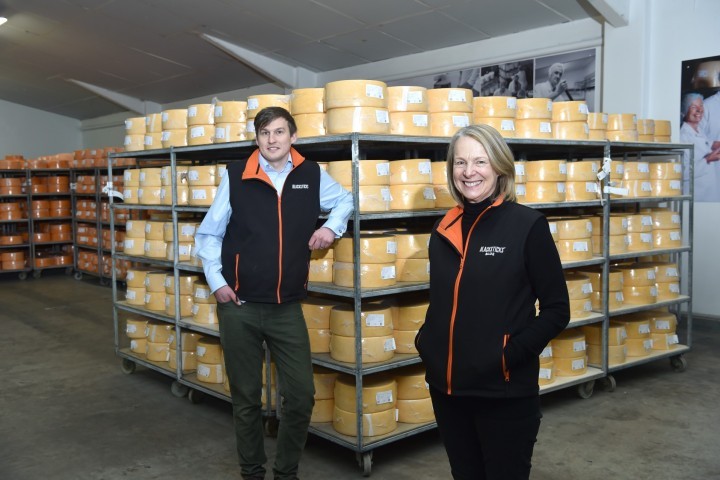
Its state-of-the-art maturation shed, uniquely designed to meet the individual needs of Butlers’ hard, blue and soft products, is an impressive building that can hold a staggering 130,000 individual cheeses.
The campus boasts a number of sustainability credentials and aims to reduce road traffic and food miles by approximately 50 per cent compared to operating across the Longridge and Inglewhite sites.
The build used rubble from the fire site to create connecting paths.
Sixty per cent of the milk used by the business, which has 80 full-time staff, comes from the family’s farm next door.
The rest is produced on farms within a 10-mile radius, some operated by family relatives.
Butlers’ list of customers includes all the major supermarket chains, including M&S and, more locally, Booths, as well as independent retailers.
It makes specialist British hard, blue and soft cheeses with cow, sheep and goat milk by hand and is perhaps best known for its flagship blue cheese brand Blacksticks Blue – a particular favourite of the monarch.
The rebuild hasn’t been confined to bricks and mortar and new tech. In February 2024, in a strategic investment in its soft cheese capacity, it acquired the Hampshire Cheese Company – described by Matthew as another critical factor in the post-fire recovery.
The King is not the only one impressed by the comeback journey. Judges at this year’s Red Rose Awards, celebrating the best of Lancashire Business, shortlisted the company for the family business and transformation awards.
It also made this year’s Lancashire Business View list of the county’s biggest companies by profit, ranking 18th in our Big 20 table.
Butlers’ turnover next year is forecast to be around £18m, with plans for more
reinvestment. Work will continue to build back.
Matthew, his co-owner and brother Daniel, and their mum Gill steer the business with an equal say and are proud of its family roots and outlook.
He says: “There’s been a great benefit to having such strong family involvement. Daniel, mum and I have different skill sets we can put to use. We work with total trust.”
Gill adds: “There was never any pressure for the fourth generation to take over. Both had their own careers and it was their choice to come back into it when the business needed their skill set. And there will be no pressure on the fifth generation.”
However, given the family’s deep history in their craft and the ‘generational investment’ that has been made, it is hard not to envisage a Hall making cheese in the Lancashire countryside in a 100 years’ time.
' fill='%23cc0935'/%3E%3C/svg%3E)
' fill='%23cc0935'/%3E%3C/svg%3E)
Enjoyed this? Read more from Ged Henderson