' fill='%23cc0935'/%3E%3C/svg%3E)

' fill='%23cc0935'/%3E%3C/svg%3E)
'%3E%3Cg id='Group_1' data-name='Group 1' transform='translate(838.16 96.811)'%3E%3Cpath id='Path_1' data-name='Path 1' d='M13.382.347l-.563,7.2q-.709,8.68-1.336,19.87Q10.847,16.343,9.354.347H.8L5.482,39.063H17.81L21.94.347Zm9.927,38.716h8.115V.347H23.309V39.063Zm11.373,0h14.07V31.314H42.8V22.8h5.07V15.436H42.8V8.095h5.417V.347H34.682ZM73.752.347q-1.6,13.708-2.265,27.5l-.9-14.732Q69.872,2.045,69.706.346H61.28q-1.794,16.432-2.243,26.568l-.829-13.06L57.351.346H49.466L53.1,39.062H63.173q1.779-15.424,2.263-20.3,1.065,11.381,2.455,20.3H78.023L81.636.347H73.754Z' transform='translate(-0.796 -0.346)' fill='%231d1d1b' fill-rule='evenodd'/%3E%3C/g%3E%3Cpath id='Path_2' data-name='Path 2' d='M220.325,39.526h9.387q4.894,0,6.476-.693a4.349,4.349,0,0,0,2.3-2.584,17.387,17.387,0,0,0,.723-5.813V26.846a12.108,12.108,0,0,0-1-5.612,5.875,5.875,0,0,0-3.817-2.619,5.68,5.68,0,0,0,3.383-2.056,9.362,9.362,0,0,0,.858-4.732q0-5.018-1.214-7.276a6.076,6.076,0,0,0-3.19-3,17.414,17.414,0,0,0-5.811-.741h-8.1Zm9.8-31.874a1.5,1.5,0,0,1,.7.92,8.266,8.266,0,0,1,.27,2.546,14.619,14.619,0,0,1-.329,4.173q-.326.729-1.522.73c-.192,0-.462.009-.809.024V7.435a5.146,5.146,0,0,1,1.687.216Zm.55,15.016a6.148,6.148,0,0,1,.424,3.012v3.611a5.622,5.622,0,0,1-.473,2.94,2.983,2.983,0,0,1-2.188.67V22.07q1.811.073,2.236.6ZM252.456.813V29.34a17.806,17.806,0,0,1-.222,3.67.954.954,0,0,1-.993.777.882.882,0,0,1-.9-.705,14.1,14.1,0,0,1-.222-3.24V.813h-8.116V23.721q0,6.551.194,8.6a9.489,9.489,0,0,0,1.252,3.886,7.862,7.862,0,0,0,3.2,2.99,10.286,10.286,0,0,0,4.934,1.147,9.373,9.373,0,0,0,4.385-.969,7.527,7.527,0,0,0,3-2.846,9.45,9.45,0,0,0,1.369-3.658,55.93,55.93,0,0,0,.23-6.181V.813ZM280.907,11a20.617,20.617,0,0,0-.724-6.539,6.269,6.269,0,0,0-2.949-3.193A10.731,10.731,0,0,0,271.849,0a9.864,9.864,0,0,0-4.936,1.16,6.828,6.828,0,0,0-2.958,3.216,17.061,17.061,0,0,0-.916,6.5,16.667,16.667,0,0,0,.646,5.07,8.846,8.846,0,0,0,1.629,3.108,39,39,0,0,0,4.011,3.611,25.408,25.408,0,0,1,3.8,3.515q.752,1.053.752,4.472a5.417,5.417,0,0,1-.4,2.342,1.28,1.28,0,0,1-1.2.789,1.155,1.155,0,0,1-1.128-.621,7.543,7.543,0,0,1-.319-2.8v-4.71H263.29v2.535A24.491,24.491,0,0,0,264,34.911a7.084,7.084,0,0,0,3.017,3.9,9.815,9.815,0,0,0,5.562,1.531,10,10,0,0,0,5.2-1.328,6.8,6.8,0,0,0,3.015-3.288,17.6,17.6,0,0,0,.781-6.1q0-5.69-1.407-8.249t-6.826-6.548a6.74,6.74,0,0,1-2.293-2.368,7.716,7.716,0,0,1-.422-2.919,5.186,5.186,0,0,1,.376-2.25,1.193,1.193,0,0,1,1.108-.742,1.007,1.007,0,0,1,.965.55,6.874,6.874,0,0,1,.289,2.558v2.87h7.537V11Zm3.219,28.527h8.114V.813h-8.114ZM306.832.813V18.245L302.284.813H295.5V39.526h6.785v-17.6l4.221,17.6h7.113V.813Zm10.043,38.713h14.073V31.778H324.99V23.266h5.069V15.9H324.99V8.562h5.418V.812H316.875V39.526ZM350.473,11a20.642,20.642,0,0,0-.724-6.539A6.269,6.269,0,0,0,346.8,1.267,10.743,10.743,0,0,0,341.412,0a9.854,9.854,0,0,0-4.933,1.16,6.828,6.828,0,0,0-2.96,3.216,17.062,17.062,0,0,0-.916,6.5,16.7,16.7,0,0,0,.646,5.07,8.833,8.833,0,0,0,1.63,3.108,38.832,38.832,0,0,0,4.009,3.611,25.288,25.288,0,0,1,3.8,3.515q.753,1.053.752,4.472a5.417,5.417,0,0,1-.4,2.342,1.279,1.279,0,0,1-1.2.789,1.155,1.155,0,0,1-1.128-.621,7.55,7.55,0,0,1-.318-2.8v-4.71h-7.537v2.535a24.45,24.45,0,0,0,.713,6.719,7.078,7.078,0,0,0,3.016,3.9,9.816,9.816,0,0,0,5.562,1.531,10,10,0,0,0,5.2-1.328,6.8,6.8,0,0,0,3.016-3.288,17.62,17.62,0,0,0,.781-6.1q0-5.69-1.406-8.249t-6.826-6.548a6.729,6.729,0,0,1-2.294-2.368,7.716,7.716,0,0,1-.422-2.919,5.171,5.171,0,0,1,.376-2.25,1.192,1.192,0,0,1,1.108-.742,1,1,0,0,1,.964.55,6.853,6.853,0,0,1,.289,2.558v2.87h7.537V11Zm20.414,0a20.667,20.667,0,0,0-.724-6.539,6.274,6.274,0,0,0-2.95-3.193A10.742,10.742,0,0,0,361.825,0a9.856,9.856,0,0,0-4.935,1.16,6.826,6.826,0,0,0-2.959,3.216,17.048,17.048,0,0,0-.915,6.5,16.668,16.668,0,0,0,.646,5.07,8.8,8.8,0,0,0,1.629,3.108,38.884,38.884,0,0,0,4.008,3.611,25.312,25.312,0,0,1,3.8,3.515q.753,1.053.751,4.472A5.419,5.419,0,0,1,363.453,33a1.278,1.278,0,0,1-1.2.789,1.155,1.155,0,0,1-1.128-.621,7.57,7.57,0,0,1-.318-2.8v-4.71h-7.537v2.535a24.45,24.45,0,0,0,.713,6.719,7.075,7.075,0,0,0,3.016,3.9,9.816,9.816,0,0,0,5.561,1.531,9.993,9.993,0,0,0,5.2-1.328,6.8,6.8,0,0,0,3.017-3.288,17.62,17.62,0,0,0,.781-6.1q0-5.69-1.407-8.249t-6.825-6.548a6.737,6.737,0,0,1-2.294-2.368,7.733,7.733,0,0,1-.422-2.919,5.171,5.171,0,0,1,.376-2.25,1.191,1.191,0,0,1,1.108-.742,1,1,0,0,1,.963.55,6.842,6.842,0,0,1,.291,2.558v2.87h7.537V11Z' transform='translate(465.745 96)' fill='%23cc0935' fill-rule='evenodd'/%3E%3Cpath id='Path_3' data-name='Path 3' d='M0,.813V39.526H13.05V31.779H8.115V.812H0Zm18.3,0-4.14,38.714h8.39l.487-6.959h2.9l.435,6.959h8.293L30.026.813Zm4.634,24.892q.318-5.14,1.558-16.259.621,9.683,1.236,16.259ZM47.379.813V18.245L42.83.813H36.044V39.526H42.83v-17.6l4.221,17.6h7.113V.813H47.378Zm28.99,13.181a31.659,31.659,0,0,0-.732-7.987,7.966,7.966,0,0,0-3.066-4.287A9.711,9.711,0,0,0,66.653,0,9.588,9.588,0,0,0,61.98,1.112,8.178,8.178,0,0,0,58.8,4.161a9.993,9.993,0,0,0-1.378,4.03,62,62,0,0,0-.232,6.276v11.31a35.789,35.789,0,0,0,.752,8.525,7.574,7.574,0,0,0,3.065,4.435,10.093,10.093,0,0,0,5.879,1.6,8.894,8.894,0,0,0,5.773-1.891,8.513,8.513,0,0,0,3.026-4.407,36.619,36.619,0,0,0,.685-8.525V24.007H68.254v4.866a17.358,17.358,0,0,1-.28,4.051,1.267,1.267,0,0,1-2.4,0,15.435,15.435,0,0,1-.27-3.682V11.262a16.565,16.565,0,0,1,.27-3.825,1.191,1.191,0,0,1,1.272-.884,1.087,1.087,0,0,1,1.147.727,14.846,14.846,0,0,1,.261,3.662v6.728h8.115V13.993ZM81.577.812,77.438,39.526h8.389l.488-6.959h2.9l.436,6.959h8.291L93.308.813H81.577ZM86.213,25.7q.317-5.14,1.557-16.259.619,9.683,1.237,16.259H86.212ZM116.519,11a20.684,20.684,0,0,0-.723-6.54,6.262,6.262,0,0,0-2.95-3.192A10.725,10.725,0,0,0,107.459,0a9.84,9.84,0,0,0-4.935,1.16,6.826,6.826,0,0,0-2.958,3.215,17.064,17.064,0,0,0-.916,6.5,16.672,16.672,0,0,0,.646,5.07,8.862,8.862,0,0,0,1.629,3.108,38.959,38.959,0,0,0,4.009,3.61,25.357,25.357,0,0,1,3.8,3.515q.752,1.053.752,4.472a5.4,5.4,0,0,1-.4,2.343,1.278,1.278,0,0,1-1.2.789,1.155,1.155,0,0,1-1.128-.621,7.556,7.556,0,0,1-.318-2.8V25.657H98.9v2.534a24.506,24.506,0,0,0,.712,6.72,7.083,7.083,0,0,0,3.017,3.9,9.828,9.828,0,0,0,5.561,1.53,10.011,10.011,0,0,0,5.2-1.326,6.8,6.8,0,0,0,3.017-3.289,17.639,17.639,0,0,0,.781-6.1q0-5.692-1.407-8.25t-6.825-6.548a6.735,6.735,0,0,1-2.294-2.367,7.722,7.722,0,0,1-.422-2.919,5.186,5.186,0,0,1,.376-2.25,1.192,1.192,0,0,1,1.108-.742,1,1,0,0,1,.964.549,6.856,6.856,0,0,1,.289,2.559v2.868h7.537V11ZM130.283.813V14.658h-2.429V.813h-8.115V39.526h8.115V23.266h2.429V39.526H138.4V.813Zm11.373,38.714h8.115V.813h-8.115Zm11.372,0h8.115V22.071q1.676,0,2.072.741a10.845,10.845,0,0,1,.4,3.85V39.526h7.536V29.316a44.475,44.475,0,0,0-.2-5.727,6.461,6.461,0,0,0-1.03-2.283,5.808,5.808,0,0,0-3.239-1.985q2.66-.312,3.566-1.865t.905-6.074q0-4.949-1.281-7.209a5.481,5.481,0,0,0-3.316-2.81,35.563,35.563,0,0,0-7.777-.55h-5.744V39.526ZM163.079,8.01a3.786,3.786,0,0,1,.531,2.415v2.128q0,2.56-.55,3.025a3.011,3.011,0,0,1-1.918.466V7.437A2.589,2.589,0,0,1,163.079,8.01Zm11.208,31.516h14.071V31.779H182.4V23.266h5.069V15.9H182.4V8.56h5.416V.813H174.288V39.526Z' transform='translate(495 96)' fill='%231d1d1b' fill-rule='evenodd'/%3E%3C/g%3E%3C/svg%3E)



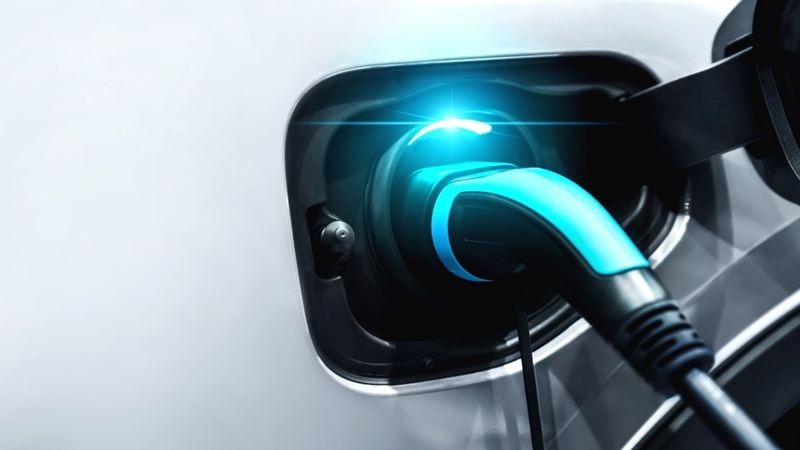
The government has launched a consultation aimed at shaping the pathway to ending sales of new petrol and diesel cars by 2030 and ensuring all new cars and vans are zero emission by 2035.
Vehicle manufacturers, suppliers, charge point operators and dealers are being asked for their views as part of the review of the government’s zero emission vehicle mandate.
The consultation comes as the UK’s transition to cleaner transport continues to gather pace. According to the government, more than one in four new cars sold are now electric, EV sales were up 45 per cent on July last year and more than two million electric vehicles are now registered on UK roads.
Announcing the consultation, transport secretary Heidi Alexander says: “The UK EV market is strong – sales are up, British manufacturers and charge point operators are investing billions, alongside our backing of £7.5 billion, including our Electric Car Grant that has helped over 160,000 people make the switch.
“It is right we keep targets under review to ensure they are practical and back British industry. The end goal hasn’t changed – but we need to take business with us on the journey and that’s exactly what we’re doing today by making sure industry has the chance to shape how we get there.”
But how are Lancashire businesses dealing with the push towards electrification? And is the infrastructure genuinely ready to support businesses in the largest automotive change since the invention of motor vehicles?
Ilyas Munshi, corporate development and communications director at Blackburn headquartered petrol forecourt operator EG on the Move, thinks there is still a way to go.
"Fuel is still going to be there, whatever government says, by 2030,” he says. “I think we will transition slowly off carbon fuels rather than this jump off the cliff in 2030. It is nice having that headline, but the reality is we are not ready for full electric yet.
"For the smaller cars, I think we will get there. But to just have this simplistic view that in 2030 everything is going to switch off was a wishful aspiration. The reality is completely different on the ground.
"Something radical needs to happen infrastructure wise for us to be able to say we can switch off traditional fuel."
Despite his scepticism, the company has launched EV on the Move, a network of charging points across its nationwide portfolio in partnership with electric car giant Tesla.
And the firm is looking at alternative locations to the traditional petrol forecourt and service station model as it looks to put charging stations in locations that offer the most convenience to drivers.
Ilyas says: "We are taking the charging solution to other locations.
“We will still have our sites, but we build our network in terms of charging locations and have charge points in different types of locations where there is good dwell time, like restaurants.”
The big challenge with modifying traditional forecourts for EV charging, Ilyas explains, is establishing the connection to the grid.
"You need a big pipe for electric to come into your site to be able to not only support the site operations, but the charging as well," he says. "That grid connection is the most challenging and most expensive.
"Sometimes, if you're a remote site, just doing the grid connection could be millions of pounds.
"Not every site is going to be suitable because of the cost or the barrier of implementing the grid connection."
Away from personal vehicles, more and more businesses are now looking to go electric. Michael Gibson set up the electric vehicle charge point management platform Fuuse in Lancaster a decade ago and has just handed the reins to new chief executive Roger Hunter. He has overseen huge growth in those 10 years, due to the number of organisations looking to make the switch to electric vehicles.
He says: "The reality is we have thousands of customers who have fleets who are not only beginning that journey, but are well into that journey.
"We do lots of vans, bus charging and even HGVs now as well.
"What people are finding, although it's an expensive learning journey, is that once they start getting to a system where they are up and running and managing it better, the cost of actually operating those vehicles is significantly less.”
And it’s not just the fuel that is cheaper for businesses. Michael says they are also much easier to maintain.
"In an EV you've got typically about eight to 10 moving parts,” he says. “There's very little to go wrong."
Fuuse has built up an impressive client list. British Airways has almost 1,000 chargers, United Utilities charges at every site in the North West. And more are getting on board.
Michael says: "Probably 30 to 40 per cent of our clients have fleets that are now 100 per cent electric vehicles. They are totally used to using it.
"You can build your own charging infrastructure at your own workplace, you can open it up to your employees, you can let staff charge their vehicles, charge your own fleet, you can even allow visitors to charge.
"It becomes a convenience that you have this ability to just plug in and charge anywhere. There's a vast array of different organisations that are doing this stuff in Lancashire.
"It's having a massive economic benefit as well. It is creating a vast amount of jobs and you can't really underestimate how big that is either."
For businesses working in this sector, the opportunities are tremendous.
Michael says: "As a Lancashire business, we have moved into this market and the growth rate is phenomenal.
"There are 31 million cars on the road and currently two million of those are now pure electric.
"We have so much more to go as a business. We have inbuilt growth and all the benefits that brings."
Another business embracing the electrification revolution in Lancashire is refuse collection vehicle manufacturer Dennis Eagle which, at its Blackpool site, oversees the production of EV cabs.
Oliver Minett, general manager at Dennis Eagle Blackpool, says: “We play a key role in supporting the production of our eCollect vehicles at Blackpool.
“We have 90 members of staff across the site collaborating to build what is essentially 30 per cent of the fully electric vehicle. This vital contribution to local manufacturing within Lancashire is so important to our people and the communities we serve, further demonstrating our steadfast commitment to delivering sustainable refuse solutions at a local level.
“As a business, we are dedicated to driving electrification forward across the UK and supporting our customers to make the transition.”
From a sales perspective, business customers across many sectors are now switching to electric, as Miles Roberts, innovation development manager for Chorley Group explains: “With passenger cars, that's almost exclusively EV. Company cars, let's say 80 per cent plus of those are probably EV. That's thanks to the benefit-in-kind taxation rules.
"With the van market, it's been harder. There hasn't typically been enough range on the electric vans to suit, particularly for small businesses.
"For your small business, such as a builder's van or a plumber, particularly if they cover a wide area, that part of it is a bit slower.
"There are more options coming but at the moment we are not seeing those selling particularly strongly to SMEs.
"For small business vehicles, it looks like uptake will take a bit longer on that."
This story was first published in Lancashire Business View issue 130 September/October 2026
' fill='%23cc0935'/%3E%3C/svg%3E)
' fill='%23cc0935'/%3E%3C/svg%3E)
Enjoyed this? Read more from Dan Clough