' fill='%23cc0935'/%3E%3C/svg%3E)

' fill='%23cc0935'/%3E%3C/svg%3E)
'%3E%3Cg id='Group_1' data-name='Group 1' transform='translate(838.16 96.811)'%3E%3Cpath id='Path_1' data-name='Path 1' d='M13.382.347l-.563,7.2q-.709,8.68-1.336,19.87Q10.847,16.343,9.354.347H.8L5.482,39.063H17.81L21.94.347Zm9.927,38.716h8.115V.347H23.309V39.063Zm11.373,0h14.07V31.314H42.8V22.8h5.07V15.436H42.8V8.095h5.417V.347H34.682ZM73.752.347q-1.6,13.708-2.265,27.5l-.9-14.732Q69.872,2.045,69.706.346H61.28q-1.794,16.432-2.243,26.568l-.829-13.06L57.351.346H49.466L53.1,39.062H63.173q1.779-15.424,2.263-20.3,1.065,11.381,2.455,20.3H78.023L81.636.347H73.754Z' transform='translate(-0.796 -0.346)' fill='%231d1d1b' fill-rule='evenodd'/%3E%3C/g%3E%3Cpath id='Path_2' data-name='Path 2' d='M220.325,39.526h9.387q4.894,0,6.476-.693a4.349,4.349,0,0,0,2.3-2.584,17.387,17.387,0,0,0,.723-5.813V26.846a12.108,12.108,0,0,0-1-5.612,5.875,5.875,0,0,0-3.817-2.619,5.68,5.68,0,0,0,3.383-2.056,9.362,9.362,0,0,0,.858-4.732q0-5.018-1.214-7.276a6.076,6.076,0,0,0-3.19-3,17.414,17.414,0,0,0-5.811-.741h-8.1Zm9.8-31.874a1.5,1.5,0,0,1,.7.92,8.266,8.266,0,0,1,.27,2.546,14.619,14.619,0,0,1-.329,4.173q-.326.729-1.522.73c-.192,0-.462.009-.809.024V7.435a5.146,5.146,0,0,1,1.687.216Zm.55,15.016a6.148,6.148,0,0,1,.424,3.012v3.611a5.622,5.622,0,0,1-.473,2.94,2.983,2.983,0,0,1-2.188.67V22.07q1.811.073,2.236.6ZM252.456.813V29.34a17.806,17.806,0,0,1-.222,3.67.954.954,0,0,1-.993.777.882.882,0,0,1-.9-.705,14.1,14.1,0,0,1-.222-3.24V.813h-8.116V23.721q0,6.551.194,8.6a9.489,9.489,0,0,0,1.252,3.886,7.862,7.862,0,0,0,3.2,2.99,10.286,10.286,0,0,0,4.934,1.147,9.373,9.373,0,0,0,4.385-.969,7.527,7.527,0,0,0,3-2.846,9.45,9.45,0,0,0,1.369-3.658,55.93,55.93,0,0,0,.23-6.181V.813ZM280.907,11a20.617,20.617,0,0,0-.724-6.539,6.269,6.269,0,0,0-2.949-3.193A10.731,10.731,0,0,0,271.849,0a9.864,9.864,0,0,0-4.936,1.16,6.828,6.828,0,0,0-2.958,3.216,17.061,17.061,0,0,0-.916,6.5,16.667,16.667,0,0,0,.646,5.07,8.846,8.846,0,0,0,1.629,3.108,39,39,0,0,0,4.011,3.611,25.408,25.408,0,0,1,3.8,3.515q.752,1.053.752,4.472a5.417,5.417,0,0,1-.4,2.342,1.28,1.28,0,0,1-1.2.789,1.155,1.155,0,0,1-1.128-.621,7.543,7.543,0,0,1-.319-2.8v-4.71H263.29v2.535A24.491,24.491,0,0,0,264,34.911a7.084,7.084,0,0,0,3.017,3.9,9.815,9.815,0,0,0,5.562,1.531,10,10,0,0,0,5.2-1.328,6.8,6.8,0,0,0,3.015-3.288,17.6,17.6,0,0,0,.781-6.1q0-5.69-1.407-8.249t-6.826-6.548a6.74,6.74,0,0,1-2.293-2.368,7.716,7.716,0,0,1-.422-2.919,5.186,5.186,0,0,1,.376-2.25,1.193,1.193,0,0,1,1.108-.742,1.007,1.007,0,0,1,.965.55,6.874,6.874,0,0,1,.289,2.558v2.87h7.537V11Zm3.219,28.527h8.114V.813h-8.114ZM306.832.813V18.245L302.284.813H295.5V39.526h6.785v-17.6l4.221,17.6h7.113V.813Zm10.043,38.713h14.073V31.778H324.99V23.266h5.069V15.9H324.99V8.562h5.418V.812H316.875V39.526ZM350.473,11a20.642,20.642,0,0,0-.724-6.539A6.269,6.269,0,0,0,346.8,1.267,10.743,10.743,0,0,0,341.412,0a9.854,9.854,0,0,0-4.933,1.16,6.828,6.828,0,0,0-2.96,3.216,17.062,17.062,0,0,0-.916,6.5,16.7,16.7,0,0,0,.646,5.07,8.833,8.833,0,0,0,1.63,3.108,38.832,38.832,0,0,0,4.009,3.611,25.288,25.288,0,0,1,3.8,3.515q.753,1.053.752,4.472a5.417,5.417,0,0,1-.4,2.342,1.279,1.279,0,0,1-1.2.789,1.155,1.155,0,0,1-1.128-.621,7.55,7.55,0,0,1-.318-2.8v-4.71h-7.537v2.535a24.45,24.45,0,0,0,.713,6.719,7.078,7.078,0,0,0,3.016,3.9,9.816,9.816,0,0,0,5.562,1.531,10,10,0,0,0,5.2-1.328,6.8,6.8,0,0,0,3.016-3.288,17.62,17.62,0,0,0,.781-6.1q0-5.69-1.406-8.249t-6.826-6.548a6.729,6.729,0,0,1-2.294-2.368,7.716,7.716,0,0,1-.422-2.919,5.171,5.171,0,0,1,.376-2.25,1.192,1.192,0,0,1,1.108-.742,1,1,0,0,1,.964.55,6.853,6.853,0,0,1,.289,2.558v2.87h7.537V11Zm20.414,0a20.667,20.667,0,0,0-.724-6.539,6.274,6.274,0,0,0-2.95-3.193A10.742,10.742,0,0,0,361.825,0a9.856,9.856,0,0,0-4.935,1.16,6.826,6.826,0,0,0-2.959,3.216,17.048,17.048,0,0,0-.915,6.5,16.668,16.668,0,0,0,.646,5.07,8.8,8.8,0,0,0,1.629,3.108,38.884,38.884,0,0,0,4.008,3.611,25.312,25.312,0,0,1,3.8,3.515q.753,1.053.751,4.472A5.419,5.419,0,0,1,363.453,33a1.278,1.278,0,0,1-1.2.789,1.155,1.155,0,0,1-1.128-.621,7.57,7.57,0,0,1-.318-2.8v-4.71h-7.537v2.535a24.45,24.45,0,0,0,.713,6.719,7.075,7.075,0,0,0,3.016,3.9,9.816,9.816,0,0,0,5.561,1.531,9.993,9.993,0,0,0,5.2-1.328,6.8,6.8,0,0,0,3.017-3.288,17.62,17.62,0,0,0,.781-6.1q0-5.69-1.407-8.249t-6.825-6.548a6.737,6.737,0,0,1-2.294-2.368,7.733,7.733,0,0,1-.422-2.919,5.171,5.171,0,0,1,.376-2.25,1.191,1.191,0,0,1,1.108-.742,1,1,0,0,1,.963.55,6.842,6.842,0,0,1,.291,2.558v2.87h7.537V11Z' transform='translate(465.745 96)' fill='%23cc0935' fill-rule='evenodd'/%3E%3Cpath id='Path_3' data-name='Path 3' d='M0,.813V39.526H13.05V31.779H8.115V.812H0Zm18.3,0-4.14,38.714h8.39l.487-6.959h2.9l.435,6.959h8.293L30.026.813Zm4.634,24.892q.318-5.14,1.558-16.259.621,9.683,1.236,16.259ZM47.379.813V18.245L42.83.813H36.044V39.526H42.83v-17.6l4.221,17.6h7.113V.813H47.378Zm28.99,13.181a31.659,31.659,0,0,0-.732-7.987,7.966,7.966,0,0,0-3.066-4.287A9.711,9.711,0,0,0,66.653,0,9.588,9.588,0,0,0,61.98,1.112,8.178,8.178,0,0,0,58.8,4.161a9.993,9.993,0,0,0-1.378,4.03,62,62,0,0,0-.232,6.276v11.31a35.789,35.789,0,0,0,.752,8.525,7.574,7.574,0,0,0,3.065,4.435,10.093,10.093,0,0,0,5.879,1.6,8.894,8.894,0,0,0,5.773-1.891,8.513,8.513,0,0,0,3.026-4.407,36.619,36.619,0,0,0,.685-8.525V24.007H68.254v4.866a17.358,17.358,0,0,1-.28,4.051,1.267,1.267,0,0,1-2.4,0,15.435,15.435,0,0,1-.27-3.682V11.262a16.565,16.565,0,0,1,.27-3.825,1.191,1.191,0,0,1,1.272-.884,1.087,1.087,0,0,1,1.147.727,14.846,14.846,0,0,1,.261,3.662v6.728h8.115V13.993ZM81.577.812,77.438,39.526h8.389l.488-6.959h2.9l.436,6.959h8.291L93.308.813H81.577ZM86.213,25.7q.317-5.14,1.557-16.259.619,9.683,1.237,16.259H86.212ZM116.519,11a20.684,20.684,0,0,0-.723-6.54,6.262,6.262,0,0,0-2.95-3.192A10.725,10.725,0,0,0,107.459,0a9.84,9.84,0,0,0-4.935,1.16,6.826,6.826,0,0,0-2.958,3.215,17.064,17.064,0,0,0-.916,6.5,16.672,16.672,0,0,0,.646,5.07,8.862,8.862,0,0,0,1.629,3.108,38.959,38.959,0,0,0,4.009,3.61,25.357,25.357,0,0,1,3.8,3.515q.752,1.053.752,4.472a5.4,5.4,0,0,1-.4,2.343,1.278,1.278,0,0,1-1.2.789,1.155,1.155,0,0,1-1.128-.621,7.556,7.556,0,0,1-.318-2.8V25.657H98.9v2.534a24.506,24.506,0,0,0,.712,6.72,7.083,7.083,0,0,0,3.017,3.9,9.828,9.828,0,0,0,5.561,1.53,10.011,10.011,0,0,0,5.2-1.326,6.8,6.8,0,0,0,3.017-3.289,17.639,17.639,0,0,0,.781-6.1q0-5.692-1.407-8.25t-6.825-6.548a6.735,6.735,0,0,1-2.294-2.367,7.722,7.722,0,0,1-.422-2.919,5.186,5.186,0,0,1,.376-2.25,1.192,1.192,0,0,1,1.108-.742,1,1,0,0,1,.964.549,6.856,6.856,0,0,1,.289,2.559v2.868h7.537V11ZM130.283.813V14.658h-2.429V.813h-8.115V39.526h8.115V23.266h2.429V39.526H138.4V.813Zm11.373,38.714h8.115V.813h-8.115Zm11.372,0h8.115V22.071q1.676,0,2.072.741a10.845,10.845,0,0,1,.4,3.85V39.526h7.536V29.316a44.475,44.475,0,0,0-.2-5.727,6.461,6.461,0,0,0-1.03-2.283,5.808,5.808,0,0,0-3.239-1.985q2.66-.312,3.566-1.865t.905-6.074q0-4.949-1.281-7.209a5.481,5.481,0,0,0-3.316-2.81,35.563,35.563,0,0,0-7.777-.55h-5.744V39.526ZM163.079,8.01a3.786,3.786,0,0,1,.531,2.415v2.128q0,2.56-.55,3.025a3.011,3.011,0,0,1-1.918.466V7.437A2.589,2.589,0,0,1,163.079,8.01Zm11.208,31.516h14.071V31.779H182.4V23.266h5.069V15.9H182.4V8.56h5.416V.813H174.288V39.526Z' transform='translate(495 96)' fill='%231d1d1b' fill-rule='evenodd'/%3E%3C/g%3E%3C/svg%3E)




Technology is evolving at a quicker pace than ever before. Economic factors like high inflation, supply chain issues and the shortage of skilled workers put enormous pressure on businesses today. The tough economic climate caused companies to re-evaluate their financial strategy and look for ways to preserve profit margins while developing the ability to respond quickly to changing economic conditions. As a result, business leaders became more open to adopting new technologies which has accelerated the rate of change.
As the first month of 2023 comes to a close, it’s time to find out which technologies are gaining the most traction and identify the trends that are most likely to affect your company. Ready? Let's see what’s going to keep us on our toes over the rest of the year.
1. SUSTAINABLE TECHNOLOGY

The negative effects of climate change are being felt across the globe. As a result of a growing sense of urgency to address it, investors, employees and customers prefer to work with companies that prioritise sustainability. Organisations approach this from different angles that range from lowering their carbon footprint and building new efficiencies into their products to using more renewable energy and creating less resource-intensive global supply chains.
SDGs and ESG are acronyms that frequently come up in conversations about how companies should respond to the climate crisis. 17 Sustainable Development Goals (SDGs) were set by the United Nations in 2015, and Environmental, Social, and Governance (ESG) is a rating system companies use to measure their environmental impact, social responsibility, and company leadership’s effectiveness in promoting engagement in guiding these initiatives. In 2023, ESG processes will become a more essential part of business strategy.
According to Gartner, CIOs and IT directors will not be exempt from being asked to meet ESG goals related to the sustainability of IT infrastructure and services. Analysts there suggest that IT departments start by focusing on energy efficiency, reducing e-waste, implementing paperless transactions and building green data centres. They can begin their evaluation of IT sustainability using parameters like cloud utilisation, power management and the number of devices per employee.
2. INNOVATIVE PLATFORM ENGINEERING

Modern software architectures are continuing to grow in complexity, and end users are often asked to operate these services with a nonexpert-level knowledge. As a response to this growing friction, platform engineering has emerged to link the service and the end user by delivering a curated set of reusable self-service tools, capabilities, and processes, optimising the developer experience and accelerating digital application delivery. Gartner predicts that by 2026, 80% of software engineering organisations will establish platform teams with 75% of those including developer self-service portals.
An Integration Platform as a Service (iPaaS) is an example of this trend in action. It’s a hosted automation platform that enables a company’s developers and other IT staff to integrate cloud applications without time-consuming special programming. An iPaaS provider hosts application servers and infrastructure data and provides integration tools as well as middleware that helps developers build, test, deploy and manage cloud software. Most iPaaS offerings also speed up the development of integration flows across a business by using prebuilt connectors and standard business rules to define interactions. An iPaaS simplifies integration activities making it easy to connect applications and data deployed both in the cloud or in a local data centre.
3. ARTIFICIAL INTELLIGENCE MEETS ENTERPRISE CONTENT MANAGEMENT

AI takes enterprise ECM a step further when it comes to document processing, managing unstructured data, content management, improved search and collaboration. The biggest advantage is that AI-powered ECM is able to understand data and context on a deeper level. In this way, it can establish relationships between the context of documents that make the information easier to retrieve when it is required.
Intelligent, automated document analysis has already reached a high level of maturity. Starting with voice input or voice control, through chatbots and translation services, to the intelligent interpretation of document content, the tools are primarily geared toward supporting and automating communication.
These technologies will become even more significant in the future and generate noticeable added value, especially in the area of process automation. In addition, there will be numerous applications in the future in which AI can make or suggest appropriate "decisions" for the user based on the content of a document. This can speed up processes, help users eliminate subjective considerations and make more data-driven decisions.
4. THE CLOUD BECOMES THE CORPORATE IT STANDARD

At the start of the Covid-19 pandemic, suddenly a large proportion of employees were working from home. Many companies didn’t have the right tools in place to support them. Then the advantages of moving to the cloud became clearer and even executives who were initially sceptical realised that cloud software was actually secure, compliant and reliable.
Today, working remotely, at least part of the time, is what employees in this tight labour market want and expect. Due to this, using cloud technology is not optional anymore - it's a necessity and the new standard. Companies are moving towards an “anywhere, anytime operations” model that allows employees to work from anywhere in the world.
More organisations will use industry-specific cloud platforms to drive agility, speed to innovation and accelerated time to value. This includes incorporating cloud software, platform and infrastructure services traditionally purchased a la carte into pre-integrated yet flexible solutions that meet the needs of specific industry verticals.
5. STRENGTHENING YOUR DIGITAL IMMUNE SYSTEM

As CIOs increasingly take on revenue-generating responsibilities, antiquated development and testing approaches are no longer sufficient for delivering business-critical solutions that provide a superior user experience. A digital immune system combines various software engineering strategies (observability, automation, extreme testing) to enhance the customer experience by protecting users from operational and security risks. Gartner predicts companies that invest in building a digital immune system increase end-user satisfaction thanks to greater uptime and a strong UX.
For example, Privacy by Design (PbD) supports a healthy digital immune system because it ensures privacy protection for employees and customers by integrating considerations of privacy issues from the very beginning of the development of products, services, business practices, and physical infrastructures. It can be contrasted to an alternative process where privacy implications are not considered until just before launch. PbD is one of the guiding principles of the General Data Protection Regulation (GDPR) and is discussed specifically in its ‘data protection by design and default’ requirements.
6. DATA DEMOCRATISATION

The average person makes as many as 2,000 decisions per hour in their personal or professional lives. Most of these decisions are made based on gut instinct; in business, however, decisions need to be fact-based because they have far-reaching consequences. Since a lot of companies are embracing data analytics as a key business driver anyway, it is no big surprise that the concept of data democratisation is trending. It aims to empower all members of a company - regardless of technical expertise or ownership - to interact comfortably with data and to discuss it confidently which leads to better business decisions.
Often, data is still owned by IT which is why other teams must go through this department to get necessary data - a time-consuming and cumbersome process. If information is distributed across all working teams and employees with diverse expertise can access data easily and quickly this enables companies to discover new business insights and gain a competitive advantage.
To make data democratisation possible, companies need to set up strong governance to ensure the data is carefully managed. Therefore, every employee should be properly trained on how to use the data to drive initiatives and processes.
7. INFORMATION EXTRACTION AND ROBOTIC AUTOMATION
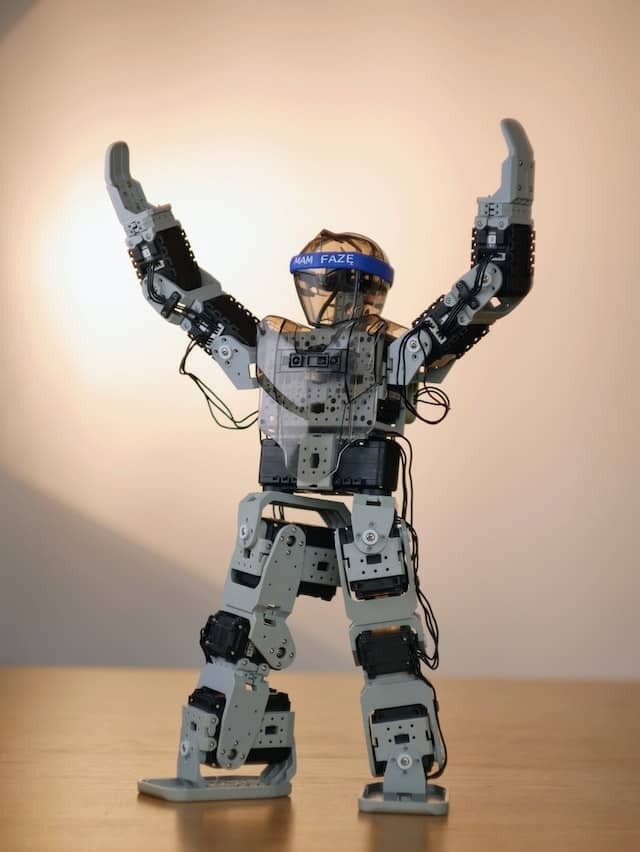
Methods of automatic information extraction and document classification have been around for more than a decade. While automatically sorting large numbers of documents by type or subject was technically possible, the underlying technologies often had to be implemented internally to work for the specific use cases.
With the development push of natural language processing technologies in the late 2010s, these capabilities are finally making their way into the mainstream, and more and more companies are making use of them. After all, even though AI-based software may still need a few years to become a common element of everyday office life, it is already doing its magic undercover.
' fill='%23cc0935'/%3E%3C/svg%3E)
' fill='%23cc0935'/%3E%3C/svg%3E)