' fill='%23cc0935'/%3E%3C/svg%3E)

' fill='%23cc0935'/%3E%3C/svg%3E)
'%3E%3Cg id='Group_1' data-name='Group 1' transform='translate(838.16 96.811)'%3E%3Cpath id='Path_1' data-name='Path 1' d='M13.382.347l-.563,7.2q-.709,8.68-1.336,19.87Q10.847,16.343,9.354.347H.8L5.482,39.063H17.81L21.94.347Zm9.927,38.716h8.115V.347H23.309V39.063Zm11.373,0h14.07V31.314H42.8V22.8h5.07V15.436H42.8V8.095h5.417V.347H34.682ZM73.752.347q-1.6,13.708-2.265,27.5l-.9-14.732Q69.872,2.045,69.706.346H61.28q-1.794,16.432-2.243,26.568l-.829-13.06L57.351.346H49.466L53.1,39.062H63.173q1.779-15.424,2.263-20.3,1.065,11.381,2.455,20.3H78.023L81.636.347H73.754Z' transform='translate(-0.796 -0.346)' fill='%231d1d1b' fill-rule='evenodd'/%3E%3C/g%3E%3Cpath id='Path_2' data-name='Path 2' d='M220.325,39.526h9.387q4.894,0,6.476-.693a4.349,4.349,0,0,0,2.3-2.584,17.387,17.387,0,0,0,.723-5.813V26.846a12.108,12.108,0,0,0-1-5.612,5.875,5.875,0,0,0-3.817-2.619,5.68,5.68,0,0,0,3.383-2.056,9.362,9.362,0,0,0,.858-4.732q0-5.018-1.214-7.276a6.076,6.076,0,0,0-3.19-3,17.414,17.414,0,0,0-5.811-.741h-8.1Zm9.8-31.874a1.5,1.5,0,0,1,.7.92,8.266,8.266,0,0,1,.27,2.546,14.619,14.619,0,0,1-.329,4.173q-.326.729-1.522.73c-.192,0-.462.009-.809.024V7.435a5.146,5.146,0,0,1,1.687.216Zm.55,15.016a6.148,6.148,0,0,1,.424,3.012v3.611a5.622,5.622,0,0,1-.473,2.94,2.983,2.983,0,0,1-2.188.67V22.07q1.811.073,2.236.6ZM252.456.813V29.34a17.806,17.806,0,0,1-.222,3.67.954.954,0,0,1-.993.777.882.882,0,0,1-.9-.705,14.1,14.1,0,0,1-.222-3.24V.813h-8.116V23.721q0,6.551.194,8.6a9.489,9.489,0,0,0,1.252,3.886,7.862,7.862,0,0,0,3.2,2.99,10.286,10.286,0,0,0,4.934,1.147,9.373,9.373,0,0,0,4.385-.969,7.527,7.527,0,0,0,3-2.846,9.45,9.45,0,0,0,1.369-3.658,55.93,55.93,0,0,0,.23-6.181V.813ZM280.907,11a20.617,20.617,0,0,0-.724-6.539,6.269,6.269,0,0,0-2.949-3.193A10.731,10.731,0,0,0,271.849,0a9.864,9.864,0,0,0-4.936,1.16,6.828,6.828,0,0,0-2.958,3.216,17.061,17.061,0,0,0-.916,6.5,16.667,16.667,0,0,0,.646,5.07,8.846,8.846,0,0,0,1.629,3.108,39,39,0,0,0,4.011,3.611,25.408,25.408,0,0,1,3.8,3.515q.752,1.053.752,4.472a5.417,5.417,0,0,1-.4,2.342,1.28,1.28,0,0,1-1.2.789,1.155,1.155,0,0,1-1.128-.621,7.543,7.543,0,0,1-.319-2.8v-4.71H263.29v2.535A24.491,24.491,0,0,0,264,34.911a7.084,7.084,0,0,0,3.017,3.9,9.815,9.815,0,0,0,5.562,1.531,10,10,0,0,0,5.2-1.328,6.8,6.8,0,0,0,3.015-3.288,17.6,17.6,0,0,0,.781-6.1q0-5.69-1.407-8.249t-6.826-6.548a6.74,6.74,0,0,1-2.293-2.368,7.716,7.716,0,0,1-.422-2.919,5.186,5.186,0,0,1,.376-2.25,1.193,1.193,0,0,1,1.108-.742,1.007,1.007,0,0,1,.965.55,6.874,6.874,0,0,1,.289,2.558v2.87h7.537V11Zm3.219,28.527h8.114V.813h-8.114ZM306.832.813V18.245L302.284.813H295.5V39.526h6.785v-17.6l4.221,17.6h7.113V.813Zm10.043,38.713h14.073V31.778H324.99V23.266h5.069V15.9H324.99V8.562h5.418V.812H316.875V39.526ZM350.473,11a20.642,20.642,0,0,0-.724-6.539A6.269,6.269,0,0,0,346.8,1.267,10.743,10.743,0,0,0,341.412,0a9.854,9.854,0,0,0-4.933,1.16,6.828,6.828,0,0,0-2.96,3.216,17.062,17.062,0,0,0-.916,6.5,16.7,16.7,0,0,0,.646,5.07,8.833,8.833,0,0,0,1.63,3.108,38.832,38.832,0,0,0,4.009,3.611,25.288,25.288,0,0,1,3.8,3.515q.753,1.053.752,4.472a5.417,5.417,0,0,1-.4,2.342,1.279,1.279,0,0,1-1.2.789,1.155,1.155,0,0,1-1.128-.621,7.55,7.55,0,0,1-.318-2.8v-4.71h-7.537v2.535a24.45,24.45,0,0,0,.713,6.719,7.078,7.078,0,0,0,3.016,3.9,9.816,9.816,0,0,0,5.562,1.531,10,10,0,0,0,5.2-1.328,6.8,6.8,0,0,0,3.016-3.288,17.62,17.62,0,0,0,.781-6.1q0-5.69-1.406-8.249t-6.826-6.548a6.729,6.729,0,0,1-2.294-2.368,7.716,7.716,0,0,1-.422-2.919,5.171,5.171,0,0,1,.376-2.25,1.192,1.192,0,0,1,1.108-.742,1,1,0,0,1,.964.55,6.853,6.853,0,0,1,.289,2.558v2.87h7.537V11Zm20.414,0a20.667,20.667,0,0,0-.724-6.539,6.274,6.274,0,0,0-2.95-3.193A10.742,10.742,0,0,0,361.825,0a9.856,9.856,0,0,0-4.935,1.16,6.826,6.826,0,0,0-2.959,3.216,17.048,17.048,0,0,0-.915,6.5,16.668,16.668,0,0,0,.646,5.07,8.8,8.8,0,0,0,1.629,3.108,38.884,38.884,0,0,0,4.008,3.611,25.312,25.312,0,0,1,3.8,3.515q.753,1.053.751,4.472A5.419,5.419,0,0,1,363.453,33a1.278,1.278,0,0,1-1.2.789,1.155,1.155,0,0,1-1.128-.621,7.57,7.57,0,0,1-.318-2.8v-4.71h-7.537v2.535a24.45,24.45,0,0,0,.713,6.719,7.075,7.075,0,0,0,3.016,3.9,9.816,9.816,0,0,0,5.561,1.531,9.993,9.993,0,0,0,5.2-1.328,6.8,6.8,0,0,0,3.017-3.288,17.62,17.62,0,0,0,.781-6.1q0-5.69-1.407-8.249t-6.825-6.548a6.737,6.737,0,0,1-2.294-2.368,7.733,7.733,0,0,1-.422-2.919,5.171,5.171,0,0,1,.376-2.25,1.191,1.191,0,0,1,1.108-.742,1,1,0,0,1,.963.55,6.842,6.842,0,0,1,.291,2.558v2.87h7.537V11Z' transform='translate(465.745 96)' fill='%23cc0935' fill-rule='evenodd'/%3E%3Cpath id='Path_3' data-name='Path 3' d='M0,.813V39.526H13.05V31.779H8.115V.812H0Zm18.3,0-4.14,38.714h8.39l.487-6.959h2.9l.435,6.959h8.293L30.026.813Zm4.634,24.892q.318-5.14,1.558-16.259.621,9.683,1.236,16.259ZM47.379.813V18.245L42.83.813H36.044V39.526H42.83v-17.6l4.221,17.6h7.113V.813H47.378Zm28.99,13.181a31.659,31.659,0,0,0-.732-7.987,7.966,7.966,0,0,0-3.066-4.287A9.711,9.711,0,0,0,66.653,0,9.588,9.588,0,0,0,61.98,1.112,8.178,8.178,0,0,0,58.8,4.161a9.993,9.993,0,0,0-1.378,4.03,62,62,0,0,0-.232,6.276v11.31a35.789,35.789,0,0,0,.752,8.525,7.574,7.574,0,0,0,3.065,4.435,10.093,10.093,0,0,0,5.879,1.6,8.894,8.894,0,0,0,5.773-1.891,8.513,8.513,0,0,0,3.026-4.407,36.619,36.619,0,0,0,.685-8.525V24.007H68.254v4.866a17.358,17.358,0,0,1-.28,4.051,1.267,1.267,0,0,1-2.4,0,15.435,15.435,0,0,1-.27-3.682V11.262a16.565,16.565,0,0,1,.27-3.825,1.191,1.191,0,0,1,1.272-.884,1.087,1.087,0,0,1,1.147.727,14.846,14.846,0,0,1,.261,3.662v6.728h8.115V13.993ZM81.577.812,77.438,39.526h8.389l.488-6.959h2.9l.436,6.959h8.291L93.308.813H81.577ZM86.213,25.7q.317-5.14,1.557-16.259.619,9.683,1.237,16.259H86.212ZM116.519,11a20.684,20.684,0,0,0-.723-6.54,6.262,6.262,0,0,0-2.95-3.192A10.725,10.725,0,0,0,107.459,0a9.84,9.84,0,0,0-4.935,1.16,6.826,6.826,0,0,0-2.958,3.215,17.064,17.064,0,0,0-.916,6.5,16.672,16.672,0,0,0,.646,5.07,8.862,8.862,0,0,0,1.629,3.108,38.959,38.959,0,0,0,4.009,3.61,25.357,25.357,0,0,1,3.8,3.515q.752,1.053.752,4.472a5.4,5.4,0,0,1-.4,2.343,1.278,1.278,0,0,1-1.2.789,1.155,1.155,0,0,1-1.128-.621,7.556,7.556,0,0,1-.318-2.8V25.657H98.9v2.534a24.506,24.506,0,0,0,.712,6.72,7.083,7.083,0,0,0,3.017,3.9,9.828,9.828,0,0,0,5.561,1.53,10.011,10.011,0,0,0,5.2-1.326,6.8,6.8,0,0,0,3.017-3.289,17.639,17.639,0,0,0,.781-6.1q0-5.692-1.407-8.25t-6.825-6.548a6.735,6.735,0,0,1-2.294-2.367,7.722,7.722,0,0,1-.422-2.919,5.186,5.186,0,0,1,.376-2.25,1.192,1.192,0,0,1,1.108-.742,1,1,0,0,1,.964.549,6.856,6.856,0,0,1,.289,2.559v2.868h7.537V11ZM130.283.813V14.658h-2.429V.813h-8.115V39.526h8.115V23.266h2.429V39.526H138.4V.813Zm11.373,38.714h8.115V.813h-8.115Zm11.372,0h8.115V22.071q1.676,0,2.072.741a10.845,10.845,0,0,1,.4,3.85V39.526h7.536V29.316a44.475,44.475,0,0,0-.2-5.727,6.461,6.461,0,0,0-1.03-2.283,5.808,5.808,0,0,0-3.239-1.985q2.66-.312,3.566-1.865t.905-6.074q0-4.949-1.281-7.209a5.481,5.481,0,0,0-3.316-2.81,35.563,35.563,0,0,0-7.777-.55h-5.744V39.526ZM163.079,8.01a3.786,3.786,0,0,1,.531,2.415v2.128q0,2.56-.55,3.025a3.011,3.011,0,0,1-1.918.466V7.437A2.589,2.589,0,0,1,163.079,8.01Zm11.208,31.516h14.071V31.779H182.4V23.266h5.069V15.9H182.4V8.56h5.416V.813H174.288V39.526Z' transform='translate(495 96)' fill='%231d1d1b' fill-rule='evenodd'/%3E%3C/g%3E%3C/svg%3E)

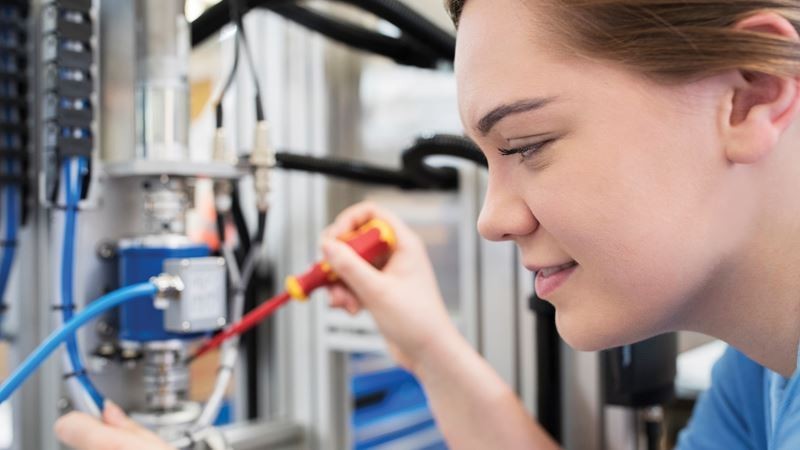
We joined with Themis at Burnley College and asked our panel what skills and leadership qualities had come to the fore during the pandemic and how they had adapted to the challenges of the ‘new normal’.
Neil Burrows – Themis at Burnley College
In March, when we had to evacuate the college and send all the staff home, we thought it was going to be the hardest thing we had to do. Within a week all our teachers were delivering online courses to all our students. Our students completed all their qualifications that year.
We’ve now got staff set up for remote work and remote learning, we’ve got some students still at home and some in college and whatever happens with this pandemic we are ready to adapt to that change right away.
We’ve turned challenges into positives and exciting opportunities, like the way we’ve changed how we deliver.
We’ve given masks out to all our students who have come back in. We’re not forcing them to wear the masks, we’re trying to educate them to wear them. There are no signs up around college saying, ‘You must do this, you must do that,’ we’re educating them, and we’re trying to talk to them about why we’re doing it, and why we need to do it.
We constantly communicate with staff, weekly messages about the risk assessments and health and safety and it is working really well. I’m really proud of all the staff here, and the students.
If a business needs to diversify; have they got the skillsets? The FE sector; colleges, training providers, we need to step up and collaborate with these businesses, to support them.
Paul McShane – PIH
The entire employer-employee relationship has changed. Probably 40 per cent of my employees are now working remotely, others are spending three days at home and two in the office, and the remainder are working in the factory full time. We’ve worked really hard to keep the team united.
We do lots of things around mental health, we run a campaign called solidarity, reaching out to people within the workforce.
We can make the business function, we manage projects all over the world, so it is easy to do remotely. But I feel sorry for people in the very early stages of their career, the formative years, because they are missing out on a lot of intangible value that is hard to replicate in a virtual world.
We’re making quite precise, timely decisions, which is important to the team. In terms of moving forward, prioritisation is absolutely key. We’re really making sure we’re putting our time to the activities that are gong to drive the greatest value. As leaders we’re also on a bit of an emotional intelligence journey. Certainly, that’s where I’m going to focus my leadership team on as we go forward.
If we look towards a low-touch economy in the future, automation is where we see a real opportunity to lead the market in our particular industry. Upskilling our manufacturing employees in digital technologies and automation is something that’s absolutely critical for our future.
No matter how well-prepared you think you are, and no matter how much you think you know, you don’t. There’s always something around the corner and you’re always learning. Don’t get complacent
Miranda Barker – East Lancashire Chamber of Commerce
It is not easy to look after people’s mental health when we’re operating remotely, managing through a screen.
Most of the management of people’s stresses and strains comes from noticing how they are, getting all those physical cues when they’re not trying to show you them and being able to pull them aside and give them space to vent.
Our approach to communications has had to change, we’re having to be much more pro-active. It isn’t any more effective, it’s just more time-consuming and more stressful.
As far as staff are concerned, I’m deliberately going out of my way to make sure people are okay, even when I haven’t seen any signals that someone might be under stress. I go and enquire and try to get people to open up. It is much harder in a remote way and everybody is different and you need different ways to get them to open up a little bit.
The second part of this is changing how you communicate with your customers, so they see you as an essential partner and feel close to you.
I've learned that I'm more adaptable than I thought I was and to be more patient. I need to learn to be better at delegating because I’m holding too many things.
On a wider note, when it comes to manufacturing, there are opportunities for companies to diversify. We need investment for that to happen and to help their workforces in this. It needs to happen now.
Lee Bayman – Daisy Communications
Communication has changed. We’ve had to adapt to make sure that we can utilise the tools available.
As a B2B company there have been some challenging times, we’ve had to react and respond quickly. On the flipside, there have been some great opportunities.
Our field sales teams are used to working face-to-face, they have had to adapt and work out how to make those connections via video calls or telephones. We have a large group of desk-based sales people as well and their productivity has gone up since working from home.
We’ve been trying, through LinkedIn and other avenues, to educate other businesses in terms of what they can do and what is available to them.
We have a different culture now to six months ago. We’ve gone from a call-centre mentality, to a more of an output-mentality.
I’ve learned that people respect core values, being honest, showing a level of integrity and just being straight with people.
Managers and HR departments can do things but it takes an individual to take control of their day and their situation. It’s about helping people own their role, giving them comfort and confidence. So, if they’re doing the school run, that’s fine, there is not issues and they don’t need to feel stressed about it, it is part and parcel of working flexibly.
If they’re feeling a bit down, do something about it. If they’re bored of the routine, change the routine. Everybody is different, there’s no one size that fits all.
Matthew Pemrick – Paradigm Precision
I’ve got a very visible management style and love talking to people. I love doing the monthly briefing, where you have all the employees in, and you can actually tell them the state of the business and what’s occurring. We can’t do that now, so we have had to fine-tune the written medium.
What we did find was that how you write things, and how you communicate it in layman’s terms, is very important. It can get twisted around and you have to explain. I’ve found it has got to be really concise, to the point and that less is more.
Preparing for the kind of conditions that have been thrown at us with Covid and the other things we’ve had to deal with in 2020, a lot is based on empathy with your people.
Studying at night I learned some of finer points of management, through toolkits and literature, but if I hadn’t done an apprenticeship and served time in the factory, I don’t think I’d have had that kind of empathy. It gives you that grounding, starting at the bottom and working your way through the system.
One of the things I have learned through this, is that no matter well prepared you think you are, and no matter how much you think you know, you don’t. There’s always something around the corner and you’re always learning. Don’t get complacent. You need the ability to expect the unexpected and to be able to expect the unexpected.
We now have to stabilise, but we also have to get ready for when the recovery does come
Sarah Crossley – Burnley College
We’ve heard some key themes about losing some of the things around collaboration, meeting face-to-face and about innovation and culture.
We’ve spent a lot of time working on our culture. We shifted focus and asked, ‘How can we make sure we’re not losing some of this and it becomes really remote, online and just a one-way passage?’
We spent time with teams but we looked at, ‘What are we meeting for?’ We did sessions around the purpose of meetings and what ideas can come out them. It was all about that connection and keeping those things together. We also focused on how we could also use activities to support mental health.
‘Design Thinking’, used to be a very practical, in-house, in-the-building, face-to-face, high-energy, where ideas get solved in a room. How do we do that when people are in eight different rooms? We drew on tools like Google and Jam Board and looked how we could keep all that energy and activity and networking, but in a remote format.
We took the attitude that you can lean into what’s happening and take the opportunities that are there. We’ve done workshops looking at current practices, how we have to adapt them in the new world and, going forward, how we will continue to adapt them, not just reset once the normal world comes back.
When it comes to myself, it is about continuing to be brave and experimental in an environment where it might be quite easy to play safe, or maintain the status quo. It is looking for opportunities and working with other people. Creativity, curiosity and resilience are the big skill requirements that are going to make a difference.
Sharon McDonald – NWAA
From a membership engagement point, you have to look at how you engage your members in a new way. Straight from lockdown we started doing webinars, something we’d never done before. I quickly taught myself how to use Zoom and did the same remotely with the staff.
It is important the companies are kept up to date but we also need to understand what they are looking for in terms of upskilling staff. They want frontline staff who can upskill and have supervisory and team leader skills. There have been a lot of voluntary redundancies. After the end of furlough, we may see skills that we didn’t expect, go out of the door.
We’re going to be looking at skills and upskilling, digitalisation. We now have to stabilise, but we also have to get ready for when the recovery does come.
As a team we’ve learned to communicate in different ways. You’re always learning as a leader, but trust in the skills of others. Trust your staff, and ensure that you follow through on everything that you say you will, so that you develop that trust that they have in you, and ensure you never, ever break that trust. Working remotely has highlighted this.
Teamwork, collaboration and empathy with each other within the team is important. It’s making sure people don’t feel pressured because they’re not working nine to five.
- To read this feature in full and access further Lancashire business news, advice and analysis subscribe to Lancashire Business View magazine or join the LBV Hub from just £2.50 per month. Click here to subscribe now.
' fill='%23cc0935'/%3E%3C/svg%3E)
' fill='%23cc0935'/%3E%3C/svg%3E)
Enjoyed this? Read more from Ged Henderson