' fill='%23cc0935'/%3E%3C/svg%3E)

' fill='%23cc0935'/%3E%3C/svg%3E)
'%3E%3Cg id='Group_1' data-name='Group 1' transform='translate(838.16 96.811)'%3E%3Cpath id='Path_1' data-name='Path 1' d='M13.382.347l-.563,7.2q-.709,8.68-1.336,19.87Q10.847,16.343,9.354.347H.8L5.482,39.063H17.81L21.94.347Zm9.927,38.716h8.115V.347H23.309V39.063Zm11.373,0h14.07V31.314H42.8V22.8h5.07V15.436H42.8V8.095h5.417V.347H34.682ZM73.752.347q-1.6,13.708-2.265,27.5l-.9-14.732Q69.872,2.045,69.706.346H61.28q-1.794,16.432-2.243,26.568l-.829-13.06L57.351.346H49.466L53.1,39.062H63.173q1.779-15.424,2.263-20.3,1.065,11.381,2.455,20.3H78.023L81.636.347H73.754Z' transform='translate(-0.796 -0.346)' fill='%231d1d1b' fill-rule='evenodd'/%3E%3C/g%3E%3Cpath id='Path_2' data-name='Path 2' d='M220.325,39.526h9.387q4.894,0,6.476-.693a4.349,4.349,0,0,0,2.3-2.584,17.387,17.387,0,0,0,.723-5.813V26.846a12.108,12.108,0,0,0-1-5.612,5.875,5.875,0,0,0-3.817-2.619,5.68,5.68,0,0,0,3.383-2.056,9.362,9.362,0,0,0,.858-4.732q0-5.018-1.214-7.276a6.076,6.076,0,0,0-3.19-3,17.414,17.414,0,0,0-5.811-.741h-8.1Zm9.8-31.874a1.5,1.5,0,0,1,.7.92,8.266,8.266,0,0,1,.27,2.546,14.619,14.619,0,0,1-.329,4.173q-.326.729-1.522.73c-.192,0-.462.009-.809.024V7.435a5.146,5.146,0,0,1,1.687.216Zm.55,15.016a6.148,6.148,0,0,1,.424,3.012v3.611a5.622,5.622,0,0,1-.473,2.94,2.983,2.983,0,0,1-2.188.67V22.07q1.811.073,2.236.6ZM252.456.813V29.34a17.806,17.806,0,0,1-.222,3.67.954.954,0,0,1-.993.777.882.882,0,0,1-.9-.705,14.1,14.1,0,0,1-.222-3.24V.813h-8.116V23.721q0,6.551.194,8.6a9.489,9.489,0,0,0,1.252,3.886,7.862,7.862,0,0,0,3.2,2.99,10.286,10.286,0,0,0,4.934,1.147,9.373,9.373,0,0,0,4.385-.969,7.527,7.527,0,0,0,3-2.846,9.45,9.45,0,0,0,1.369-3.658,55.93,55.93,0,0,0,.23-6.181V.813ZM280.907,11a20.617,20.617,0,0,0-.724-6.539,6.269,6.269,0,0,0-2.949-3.193A10.731,10.731,0,0,0,271.849,0a9.864,9.864,0,0,0-4.936,1.16,6.828,6.828,0,0,0-2.958,3.216,17.061,17.061,0,0,0-.916,6.5,16.667,16.667,0,0,0,.646,5.07,8.846,8.846,0,0,0,1.629,3.108,39,39,0,0,0,4.011,3.611,25.408,25.408,0,0,1,3.8,3.515q.752,1.053.752,4.472a5.417,5.417,0,0,1-.4,2.342,1.28,1.28,0,0,1-1.2.789,1.155,1.155,0,0,1-1.128-.621,7.543,7.543,0,0,1-.319-2.8v-4.71H263.29v2.535A24.491,24.491,0,0,0,264,34.911a7.084,7.084,0,0,0,3.017,3.9,9.815,9.815,0,0,0,5.562,1.531,10,10,0,0,0,5.2-1.328,6.8,6.8,0,0,0,3.015-3.288,17.6,17.6,0,0,0,.781-6.1q0-5.69-1.407-8.249t-6.826-6.548a6.74,6.74,0,0,1-2.293-2.368,7.716,7.716,0,0,1-.422-2.919,5.186,5.186,0,0,1,.376-2.25,1.193,1.193,0,0,1,1.108-.742,1.007,1.007,0,0,1,.965.55,6.874,6.874,0,0,1,.289,2.558v2.87h7.537V11Zm3.219,28.527h8.114V.813h-8.114ZM306.832.813V18.245L302.284.813H295.5V39.526h6.785v-17.6l4.221,17.6h7.113V.813Zm10.043,38.713h14.073V31.778H324.99V23.266h5.069V15.9H324.99V8.562h5.418V.812H316.875V39.526ZM350.473,11a20.642,20.642,0,0,0-.724-6.539A6.269,6.269,0,0,0,346.8,1.267,10.743,10.743,0,0,0,341.412,0a9.854,9.854,0,0,0-4.933,1.16,6.828,6.828,0,0,0-2.96,3.216,17.062,17.062,0,0,0-.916,6.5,16.7,16.7,0,0,0,.646,5.07,8.833,8.833,0,0,0,1.63,3.108,38.832,38.832,0,0,0,4.009,3.611,25.288,25.288,0,0,1,3.8,3.515q.753,1.053.752,4.472a5.417,5.417,0,0,1-.4,2.342,1.279,1.279,0,0,1-1.2.789,1.155,1.155,0,0,1-1.128-.621,7.55,7.55,0,0,1-.318-2.8v-4.71h-7.537v2.535a24.45,24.45,0,0,0,.713,6.719,7.078,7.078,0,0,0,3.016,3.9,9.816,9.816,0,0,0,5.562,1.531,10,10,0,0,0,5.2-1.328,6.8,6.8,0,0,0,3.016-3.288,17.62,17.62,0,0,0,.781-6.1q0-5.69-1.406-8.249t-6.826-6.548a6.729,6.729,0,0,1-2.294-2.368,7.716,7.716,0,0,1-.422-2.919,5.171,5.171,0,0,1,.376-2.25,1.192,1.192,0,0,1,1.108-.742,1,1,0,0,1,.964.55,6.853,6.853,0,0,1,.289,2.558v2.87h7.537V11Zm20.414,0a20.667,20.667,0,0,0-.724-6.539,6.274,6.274,0,0,0-2.95-3.193A10.742,10.742,0,0,0,361.825,0a9.856,9.856,0,0,0-4.935,1.16,6.826,6.826,0,0,0-2.959,3.216,17.048,17.048,0,0,0-.915,6.5,16.668,16.668,0,0,0,.646,5.07,8.8,8.8,0,0,0,1.629,3.108,38.884,38.884,0,0,0,4.008,3.611,25.312,25.312,0,0,1,3.8,3.515q.753,1.053.751,4.472A5.419,5.419,0,0,1,363.453,33a1.278,1.278,0,0,1-1.2.789,1.155,1.155,0,0,1-1.128-.621,7.57,7.57,0,0,1-.318-2.8v-4.71h-7.537v2.535a24.45,24.45,0,0,0,.713,6.719,7.075,7.075,0,0,0,3.016,3.9,9.816,9.816,0,0,0,5.561,1.531,9.993,9.993,0,0,0,5.2-1.328,6.8,6.8,0,0,0,3.017-3.288,17.62,17.62,0,0,0,.781-6.1q0-5.69-1.407-8.249t-6.825-6.548a6.737,6.737,0,0,1-2.294-2.368,7.733,7.733,0,0,1-.422-2.919,5.171,5.171,0,0,1,.376-2.25,1.191,1.191,0,0,1,1.108-.742,1,1,0,0,1,.963.55,6.842,6.842,0,0,1,.291,2.558v2.87h7.537V11Z' transform='translate(465.745 96)' fill='%23cc0935' fill-rule='evenodd'/%3E%3Cpath id='Path_3' data-name='Path 3' d='M0,.813V39.526H13.05V31.779H8.115V.812H0Zm18.3,0-4.14,38.714h8.39l.487-6.959h2.9l.435,6.959h8.293L30.026.813Zm4.634,24.892q.318-5.14,1.558-16.259.621,9.683,1.236,16.259ZM47.379.813V18.245L42.83.813H36.044V39.526H42.83v-17.6l4.221,17.6h7.113V.813H47.378Zm28.99,13.181a31.659,31.659,0,0,0-.732-7.987,7.966,7.966,0,0,0-3.066-4.287A9.711,9.711,0,0,0,66.653,0,9.588,9.588,0,0,0,61.98,1.112,8.178,8.178,0,0,0,58.8,4.161a9.993,9.993,0,0,0-1.378,4.03,62,62,0,0,0-.232,6.276v11.31a35.789,35.789,0,0,0,.752,8.525,7.574,7.574,0,0,0,3.065,4.435,10.093,10.093,0,0,0,5.879,1.6,8.894,8.894,0,0,0,5.773-1.891,8.513,8.513,0,0,0,3.026-4.407,36.619,36.619,0,0,0,.685-8.525V24.007H68.254v4.866a17.358,17.358,0,0,1-.28,4.051,1.267,1.267,0,0,1-2.4,0,15.435,15.435,0,0,1-.27-3.682V11.262a16.565,16.565,0,0,1,.27-3.825,1.191,1.191,0,0,1,1.272-.884,1.087,1.087,0,0,1,1.147.727,14.846,14.846,0,0,1,.261,3.662v6.728h8.115V13.993ZM81.577.812,77.438,39.526h8.389l.488-6.959h2.9l.436,6.959h8.291L93.308.813H81.577ZM86.213,25.7q.317-5.14,1.557-16.259.619,9.683,1.237,16.259H86.212ZM116.519,11a20.684,20.684,0,0,0-.723-6.54,6.262,6.262,0,0,0-2.95-3.192A10.725,10.725,0,0,0,107.459,0a9.84,9.84,0,0,0-4.935,1.16,6.826,6.826,0,0,0-2.958,3.215,17.064,17.064,0,0,0-.916,6.5,16.672,16.672,0,0,0,.646,5.07,8.862,8.862,0,0,0,1.629,3.108,38.959,38.959,0,0,0,4.009,3.61,25.357,25.357,0,0,1,3.8,3.515q.752,1.053.752,4.472a5.4,5.4,0,0,1-.4,2.343,1.278,1.278,0,0,1-1.2.789,1.155,1.155,0,0,1-1.128-.621,7.556,7.556,0,0,1-.318-2.8V25.657H98.9v2.534a24.506,24.506,0,0,0,.712,6.72,7.083,7.083,0,0,0,3.017,3.9,9.828,9.828,0,0,0,5.561,1.53,10.011,10.011,0,0,0,5.2-1.326,6.8,6.8,0,0,0,3.017-3.289,17.639,17.639,0,0,0,.781-6.1q0-5.692-1.407-8.25t-6.825-6.548a6.735,6.735,0,0,1-2.294-2.367,7.722,7.722,0,0,1-.422-2.919,5.186,5.186,0,0,1,.376-2.25,1.192,1.192,0,0,1,1.108-.742,1,1,0,0,1,.964.549,6.856,6.856,0,0,1,.289,2.559v2.868h7.537V11ZM130.283.813V14.658h-2.429V.813h-8.115V39.526h8.115V23.266h2.429V39.526H138.4V.813Zm11.373,38.714h8.115V.813h-8.115Zm11.372,0h8.115V22.071q1.676,0,2.072.741a10.845,10.845,0,0,1,.4,3.85V39.526h7.536V29.316a44.475,44.475,0,0,0-.2-5.727,6.461,6.461,0,0,0-1.03-2.283,5.808,5.808,0,0,0-3.239-1.985q2.66-.312,3.566-1.865t.905-6.074q0-4.949-1.281-7.209a5.481,5.481,0,0,0-3.316-2.81,35.563,35.563,0,0,0-7.777-.55h-5.744V39.526ZM163.079,8.01a3.786,3.786,0,0,1,.531,2.415v2.128q0,2.56-.55,3.025a3.011,3.011,0,0,1-1.918.466V7.437A2.589,2.589,0,0,1,163.079,8.01Zm11.208,31.516h14.071V31.779H182.4V23.266h5.069V15.9H182.4V8.56h5.416V.813H174.288V39.526Z' transform='translate(495 96)' fill='%231d1d1b' fill-rule='evenodd'/%3E%3C/g%3E%3C/svg%3E)



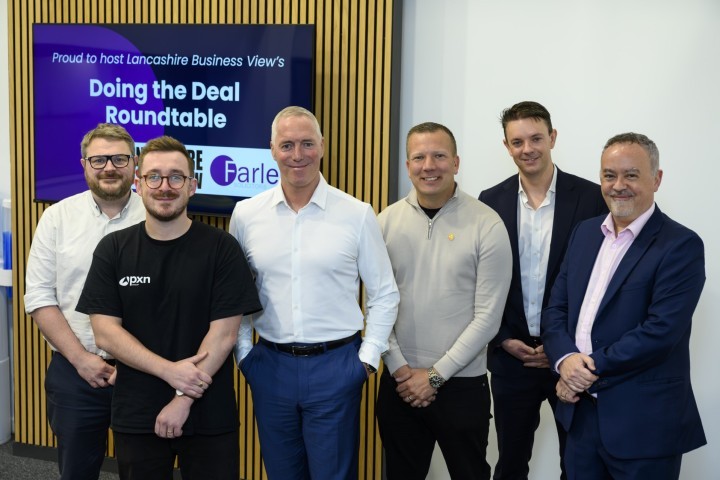
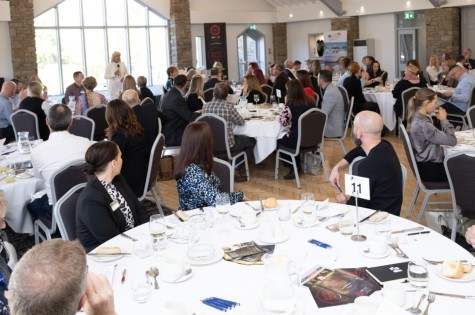
Our ‘Doing the Deal’ conversation centred on Private Equity and Venture Capital and their role in business growth and transformation. We brought our specially invited business leaders and advisors together at the headquarters of law firm Farleys for a wide-ranging debate around dealmaking and finding the right funding partner.
Stuart Young, Chief executive Panthera
In August, Panthera Biopartners announced it had become majority owned by private equity investor LDC. The deal marked a successful exit for BGF and Gresham House Ventures.
As part of the new structure, BGF reinvested as a minority shareholder.
Based in Preston, we have sites across the UK and we run clinical trials on behalf of pharma companies.
One of our founders is from a venture capital (VC) background and when we sat down to put a business plan together, we realised that if we wanted to do this well and not on a shoestring, we would need to raise capital from an early stage.
We got involved with a VC called Gresham House at that early stage, with additional investment coming from BGF. That really kick-started our growth in terms of being able to build infrastructure and staffing.
The latest deal was prompted by the fact we’d reached a stage in our journey where, if we wanted to take this international, which is very much our next stage of growth, we needed to have the right investors set. At this stage it was fragmented.
So, we went out to get majority private equity to clean up the share book and give us the appetite to kick-on with new institutional backers.
We operate in quite a sexy niche in life sciences and there was a huge appetite from both UK and international PE as well as trade. We appointed some pretty heavy-hitting advisors to help us do it and that was a great call.
While it was hard work and a big distraction, it is probably the most exciting thing I’ve ever done. Was it easy? No. But we reaped the benefit of a very competitive process all the way through.
We found it relatively easy to find people who wanted the business, some fantastic people, and we had to say no to most of them.
We started with a team that knows what ‘big’ looks like and we all came from the industry.
We built a relationship with our main advisor. By the time we’d finished we had an almost telepathic bond.
One of the things we had to do before we even appointed them was to get real clarity on what every shareholder wanted going into the deal. We wanted that certainty.
Once we knew what everyone wanted we could stand in front of advisors and buyers and tell them with certainty what we wanted to achieve.
Going in with that clarity meant that we didn’t get any last-minute demands that were unreasonable. That was really important.
And we went out and spoke to a lot of people, counterparts in the industry that had completed a transaction. You should absolutely talk to people who have done it before.
Find 10 people, they are out there and they are usually willing to share, quietly and privately, their experiences. Listen to them.
Ben Davies, marketing director, Praetura Ventures
Praetura is a venture capital firm operating in the North West that invests in early-stage businesses.
Based in Manchester, Leeds and Edinburgh, we are are a proudly northern VC. We merged with Par Equity earlier this year and that has created the fastest growing VC outside the south east of England.
We will provide investment from £200,000 up to £8m and we are a fairly high-support VC. We roll up our sleeves to help companies grow. There’s a healthy PE community in this part of the world, but it isn’t especially noisy. It’s different for VCs because there are a lot of international players who are expanding at pace.
Looking at Lancashire, I’d say the trajectory is a positive one. You have incredibly progressive public sector programmes combined with some really decent success stories.
Of all the counties we work in, this is probably the most responsive to new initiatives. Projects like Fraser House, the digital and tech hub in Lancaster, are exceptional.
Even places like Leeds, Liverpool or Birmingham would kill to have a Fraser House as a cornerstone location.
We have funded quite a few Lancashire businesses. The Modern Milkman has been named as one of the UK and Europe’s fastest growing companies and it started in Colne. We’ve worked really closely with founder Simon Mellin, helping him expand into the USA.
Lancashire is a place that sometimes sells itself short, considering the amount of talent that exists here and the knowledge assets. There are amazing advanced manufacturers and brilliant life-science businesses.
It is sometimes a narrative issue, as opposed to a talent issue, to be perfectly honest.
There is also an element where VCs have not been seen as accessible in this part of the world for many years and that is something that has to change.
If you don’t have a decent angel network then businesses won’t get to our door. And if they don’t get to us, there is no hope of them securing PE. There is a funnel here and that needs to work.
When we’re looking at a business, we’re looking at the people and asking, ‘are they resilient enough? Are they dogged enough? Do they know their market? Are they commercial? Are they customer obsessed in order to get to the next stage?’
Also, what have they done before?
We will back someone we believe can make a vision a reality. Get your narrative right. There is often a lack of urgency in the way people fundraise. We hate the idea of Fear of Missing Out (FOMO). If you can say ‘this train is leaving and you are either on it or not’ it gets you to a decision much quicker.
Treat fundraising like a sales process. We see people who say they’ve spoken to 10 VCs. You haven’t started, come back to me when you’ve spoken to 200.
Treat if like a funnel, start with the ones you want the least and keep going towards the ones you want the most. You will polish yourself on the way through. If you’re fundraising start 12 months earlier than you think you need to get VC money.
Ian Liddle, Joint managing partner, Farleys
In October 2022, Farleys became part of Lawfront. Backed by private equity fund Blixt, it provides legal services to individuals and businesses through leading regional law firms. Farleys continues to operate under its own brand.
You either choose the PE route or you are chosen. There are lots of reasons why you might choose it, some businesses do because they are struggling with succession, others because they are looking for external investment.
We were not looking for private equity funding, we were doing really well. We were approached.
We’d had approaches before and weren’t really interested but Lawfront’s message was slightly different.
They said they were accountants, not lawyers, and didn’t know how to run a law firm. They were trying to build a group of firms, each with an individual identity.
We liked the fact they were not going to interfere. Obviously, the proof is in the pudding and three years into the journey they have been true to their word. They have supported us with a whole host of investments in systems, people and premises. Our experience has been wholly satisfactory.
But I do know that a lot of other people haven’t had good experiences, so what I’d say is choose your partner carefully.
Growth is central to everything that we do at the moment. PE by its very nature wants growth equity. They want you to drive growth and Lawfront has given us the platform to achieve that.
They will say, ‘go and employ another 20 people’. When the business was ours and we were managing the bottom-line, we were more concerned about the hit on profitability in the short-term that would mean, so we wouldn’t necessarily do it.
But the PE approach is very-turnover driven.
They want to see the growth and they will take a view on their investment. What is critical to Lawfront is the strength of the leadership team in the firms they are looking to acquire.
You might have an underlying good business, but if the leadership team is not settled and strong and clear in terms of what they are going to deliver going forward, they won’t invest.
When it comes to PE, be clear about the reasons why you want to go down that route and be clear where you want to get to.
Things can unravel quickly because you have chosen badly or didn’t understand what the journey was going to look like and didn’t realise what was going to be asked of you. Have those conversations at the outset so no-one is under any illusions.
Another issue for business owners is that they will no longer be making all the decisions. Some people struggle with that. Your decision is not always going to be final, it is going to be made in conjunction with your partner. If you are not going to be able to deal with that, it is probably not for you.
And you have got to view it as partnership. You are on a journey together. You can’t have it all your own way.
Stephen Robinson, Director, PM+M Corporate Finance
Chartered accountancy, business advisory and financial planning group PM+M is headquartered in Blackburn.
My team is focused on private company sales valued between £5m and £25m Enterprise Value. There is an attitude towards PE and VC in Lancashire, and it centres around culture and communication.
There is a perception that VC funders are only interested in a very limited number of businesses and that only a small percentage of those businesses are in Lancashire.
There is also a cultural view in Lancashire, and in the north generally, that you give away your equity with great reluctance, unless there is a very clear value add from a provider.
It is a very common view.
When it comes to communication, the question should be, ‘Are we talking the same language and do we understand each other?’
Do the business and the funder understand each other when the talk is about growth and does it mean the same thing to them?
A lot of these things need to be picked up on and that is where advisors come in.
There is an education piece that needs to addressed before talking to any potential funder.
You really have to get to know as much as possible about your potential partners or the key person in that group or fund. If you don’t it is very easy to see private equity going wrong down the line.
Sometimes the business or market completely changes and what was viable becomes unviable. Other times, there just isn’t enough agreement, communication or shared understanding between the parties during the deal process. You have to get that clear from the start. There has to be alignment.
You have to talk about what you mean by growth. When it comes to a trade-off between profit and growth in the next 12 months, what are we actually doing?
In practice these are the things you need to think through prior to the investment.
If you get the sense that a partner or funder will change or tweak their approach a little for the same end goal, which is growth, then that is a good sign.
However, when you are dealing with counterparts and they are following a process and will not divert from it, if they are not willing to move at all, that is often an amber flag.
I would say that businesses should keep an open mind about venture capital and private equity investment. Listen and take as many soundings and talk to as many people as you can. And also, be dispassionate.
Perran Cooke, Chief executive, Sowena Group
Sowena specialises in recruiting for pre-or post-private equity (PE), venture capital (VC)-backed, and high-growth companies.
It works closely with chief executives, founders and chief financial officers to create recruitment strategies that support high-growth companies, PE firms and financial institutions.
We work with businesses looking at private equity and VC or are on a growth journey.
We partner with banks, PE houses, auditors and solicitors, essentially working with their clients to identify the right talent to push them onto the next level.
Our work helps businesses get the right team together and that process starts before they have even talked to a VC or PE house. Some of the businesses may not know what route they want to take.
We will work with them to talk about what they need now, what they will need in two years’ time, and how they are going to grow their functions and operations if they did want to do an exit in the future.
It is very much about the team. What have they got and do they understand the journey they are going to be on? It might be that they need a chief financial officer with greater experience, but not just yet.
It is so important to get that financial person in place when you are working with VC and PE.
The bigger PE houses have a picture of what a chief finance officer looks like.
It is imperative to have someone onboard who really understands the issues and the journey.
The current finance director may not be the right person to lead the process and we will recommend that the chief executive brings someone in that is more strategic because it is going to require a completely different skillset to get a deal over the line.
Businesses looking to do a deal should make sure they look at and revise their finance function with the full management team before looking at the journey and understand that it takes time to get the right person in.
Also, the runway is 18 months, so get the right people in before you start looking at doing a deal.
If a business won’t change its way of thinking or won’t adapt that is a red flag when it comes to PE.
Ben Smith, Head of Asset Based Lending, Interpath Advisory
Interpath Advisory supports businesses, their investors and stakeholders across a broad range of specialisms spanning deals, advisory and restructuring capabilities.
It has 11 offices across the country.
I lead our debt advisory practice in the north, raising funding for businesses of specific sizes from upwards of £5m. I work with a lot of private equity on the way into deals.
I was talking to a VC venture debt provider recently and they are looking for investments in the North West, but a lot of their money is going elsewhere.
Maybe we aren’t quite as bullish as some of our counterparts in other parts of the country. Perhaps we are not talking ourselves up in the right way.
Good businesses and good opportunities absolutely still exist. We’ve got an abundance of those in the region. However, make no mistake, it’s a challenging deal-making environment at the moment.
I would urge businesses to cast their net wide. There is a huge amount of investment capital out there from private equity, VC and debt funders.
As much as we are proud Lancastrians, sometimes we have to go down to London to find the right partner. We need to be open minded in terms of where the perfect partner or investor might be.
When you’re doing a deal, you need alignment across the shareholder group – and a clear understanding of what you really must achieve from it.
What are your non-negotiables? What are the nice-to-haves? That clarity helps you see where you can flex and where the red lines are. If you can reach a collective position and the deal lands in that strike zone – run with it.
During due diligence things are going to come out of the woodwork. Buyers might be changing what the terms of the deal looks like.
If you understand as a shareholder group where you are and what your position is, that is going to allow you to react during the process.
It can be an emotional time when people are selling, particularly when they are a founder or have invested in the business
for many decades.
It is the job of the advisor to offer an impartial, objective, dispassionate view because that is sometimes what people need to hear. Being dispassionate is critical to the whole process
' fill='%23cc0935'/%3E%3C/svg%3E)
' fill='%23cc0935'/%3E%3C/svg%3E)
Enjoyed this? Read more from Ged Henderson