' fill='%23cc0935'/%3E%3C/svg%3E)

' fill='%23cc0935'/%3E%3C/svg%3E)
'%3E%3Cg id='Group_1' data-name='Group 1' transform='translate(838.16 96.811)'%3E%3Cpath id='Path_1' data-name='Path 1' d='M13.382.347l-.563,7.2q-.709,8.68-1.336,19.87Q10.847,16.343,9.354.347H.8L5.482,39.063H17.81L21.94.347Zm9.927,38.716h8.115V.347H23.309V39.063Zm11.373,0h14.07V31.314H42.8V22.8h5.07V15.436H42.8V8.095h5.417V.347H34.682ZM73.752.347q-1.6,13.708-2.265,27.5l-.9-14.732Q69.872,2.045,69.706.346H61.28q-1.794,16.432-2.243,26.568l-.829-13.06L57.351.346H49.466L53.1,39.062H63.173q1.779-15.424,2.263-20.3,1.065,11.381,2.455,20.3H78.023L81.636.347H73.754Z' transform='translate(-0.796 -0.346)' fill='%231d1d1b' fill-rule='evenodd'/%3E%3C/g%3E%3Cpath id='Path_2' data-name='Path 2' d='M220.325,39.526h9.387q4.894,0,6.476-.693a4.349,4.349,0,0,0,2.3-2.584,17.387,17.387,0,0,0,.723-5.813V26.846a12.108,12.108,0,0,0-1-5.612,5.875,5.875,0,0,0-3.817-2.619,5.68,5.68,0,0,0,3.383-2.056,9.362,9.362,0,0,0,.858-4.732q0-5.018-1.214-7.276a6.076,6.076,0,0,0-3.19-3,17.414,17.414,0,0,0-5.811-.741h-8.1Zm9.8-31.874a1.5,1.5,0,0,1,.7.92,8.266,8.266,0,0,1,.27,2.546,14.619,14.619,0,0,1-.329,4.173q-.326.729-1.522.73c-.192,0-.462.009-.809.024V7.435a5.146,5.146,0,0,1,1.687.216Zm.55,15.016a6.148,6.148,0,0,1,.424,3.012v3.611a5.622,5.622,0,0,1-.473,2.94,2.983,2.983,0,0,1-2.188.67V22.07q1.811.073,2.236.6ZM252.456.813V29.34a17.806,17.806,0,0,1-.222,3.67.954.954,0,0,1-.993.777.882.882,0,0,1-.9-.705,14.1,14.1,0,0,1-.222-3.24V.813h-8.116V23.721q0,6.551.194,8.6a9.489,9.489,0,0,0,1.252,3.886,7.862,7.862,0,0,0,3.2,2.99,10.286,10.286,0,0,0,4.934,1.147,9.373,9.373,0,0,0,4.385-.969,7.527,7.527,0,0,0,3-2.846,9.45,9.45,0,0,0,1.369-3.658,55.93,55.93,0,0,0,.23-6.181V.813ZM280.907,11a20.617,20.617,0,0,0-.724-6.539,6.269,6.269,0,0,0-2.949-3.193A10.731,10.731,0,0,0,271.849,0a9.864,9.864,0,0,0-4.936,1.16,6.828,6.828,0,0,0-2.958,3.216,17.061,17.061,0,0,0-.916,6.5,16.667,16.667,0,0,0,.646,5.07,8.846,8.846,0,0,0,1.629,3.108,39,39,0,0,0,4.011,3.611,25.408,25.408,0,0,1,3.8,3.515q.752,1.053.752,4.472a5.417,5.417,0,0,1-.4,2.342,1.28,1.28,0,0,1-1.2.789,1.155,1.155,0,0,1-1.128-.621,7.543,7.543,0,0,1-.319-2.8v-4.71H263.29v2.535A24.491,24.491,0,0,0,264,34.911a7.084,7.084,0,0,0,3.017,3.9,9.815,9.815,0,0,0,5.562,1.531,10,10,0,0,0,5.2-1.328,6.8,6.8,0,0,0,3.015-3.288,17.6,17.6,0,0,0,.781-6.1q0-5.69-1.407-8.249t-6.826-6.548a6.74,6.74,0,0,1-2.293-2.368,7.716,7.716,0,0,1-.422-2.919,5.186,5.186,0,0,1,.376-2.25,1.193,1.193,0,0,1,1.108-.742,1.007,1.007,0,0,1,.965.55,6.874,6.874,0,0,1,.289,2.558v2.87h7.537V11Zm3.219,28.527h8.114V.813h-8.114ZM306.832.813V18.245L302.284.813H295.5V39.526h6.785v-17.6l4.221,17.6h7.113V.813Zm10.043,38.713h14.073V31.778H324.99V23.266h5.069V15.9H324.99V8.562h5.418V.812H316.875V39.526ZM350.473,11a20.642,20.642,0,0,0-.724-6.539A6.269,6.269,0,0,0,346.8,1.267,10.743,10.743,0,0,0,341.412,0a9.854,9.854,0,0,0-4.933,1.16,6.828,6.828,0,0,0-2.96,3.216,17.062,17.062,0,0,0-.916,6.5,16.7,16.7,0,0,0,.646,5.07,8.833,8.833,0,0,0,1.63,3.108,38.832,38.832,0,0,0,4.009,3.611,25.288,25.288,0,0,1,3.8,3.515q.753,1.053.752,4.472a5.417,5.417,0,0,1-.4,2.342,1.279,1.279,0,0,1-1.2.789,1.155,1.155,0,0,1-1.128-.621,7.55,7.55,0,0,1-.318-2.8v-4.71h-7.537v2.535a24.45,24.45,0,0,0,.713,6.719,7.078,7.078,0,0,0,3.016,3.9,9.816,9.816,0,0,0,5.562,1.531,10,10,0,0,0,5.2-1.328,6.8,6.8,0,0,0,3.016-3.288,17.62,17.62,0,0,0,.781-6.1q0-5.69-1.406-8.249t-6.826-6.548a6.729,6.729,0,0,1-2.294-2.368,7.716,7.716,0,0,1-.422-2.919,5.171,5.171,0,0,1,.376-2.25,1.192,1.192,0,0,1,1.108-.742,1,1,0,0,1,.964.55,6.853,6.853,0,0,1,.289,2.558v2.87h7.537V11Zm20.414,0a20.667,20.667,0,0,0-.724-6.539,6.274,6.274,0,0,0-2.95-3.193A10.742,10.742,0,0,0,361.825,0a9.856,9.856,0,0,0-4.935,1.16,6.826,6.826,0,0,0-2.959,3.216,17.048,17.048,0,0,0-.915,6.5,16.668,16.668,0,0,0,.646,5.07,8.8,8.8,0,0,0,1.629,3.108,38.884,38.884,0,0,0,4.008,3.611,25.312,25.312,0,0,1,3.8,3.515q.753,1.053.751,4.472A5.419,5.419,0,0,1,363.453,33a1.278,1.278,0,0,1-1.2.789,1.155,1.155,0,0,1-1.128-.621,7.57,7.57,0,0,1-.318-2.8v-4.71h-7.537v2.535a24.45,24.45,0,0,0,.713,6.719,7.075,7.075,0,0,0,3.016,3.9,9.816,9.816,0,0,0,5.561,1.531,9.993,9.993,0,0,0,5.2-1.328,6.8,6.8,0,0,0,3.017-3.288,17.62,17.62,0,0,0,.781-6.1q0-5.69-1.407-8.249t-6.825-6.548a6.737,6.737,0,0,1-2.294-2.368,7.733,7.733,0,0,1-.422-2.919,5.171,5.171,0,0,1,.376-2.25,1.191,1.191,0,0,1,1.108-.742,1,1,0,0,1,.963.55,6.842,6.842,0,0,1,.291,2.558v2.87h7.537V11Z' transform='translate(465.745 96)' fill='%23cc0935' fill-rule='evenodd'/%3E%3Cpath id='Path_3' data-name='Path 3' d='M0,.813V39.526H13.05V31.779H8.115V.812H0Zm18.3,0-4.14,38.714h8.39l.487-6.959h2.9l.435,6.959h8.293L30.026.813Zm4.634,24.892q.318-5.14,1.558-16.259.621,9.683,1.236,16.259ZM47.379.813V18.245L42.83.813H36.044V39.526H42.83v-17.6l4.221,17.6h7.113V.813H47.378Zm28.99,13.181a31.659,31.659,0,0,0-.732-7.987,7.966,7.966,0,0,0-3.066-4.287A9.711,9.711,0,0,0,66.653,0,9.588,9.588,0,0,0,61.98,1.112,8.178,8.178,0,0,0,58.8,4.161a9.993,9.993,0,0,0-1.378,4.03,62,62,0,0,0-.232,6.276v11.31a35.789,35.789,0,0,0,.752,8.525,7.574,7.574,0,0,0,3.065,4.435,10.093,10.093,0,0,0,5.879,1.6,8.894,8.894,0,0,0,5.773-1.891,8.513,8.513,0,0,0,3.026-4.407,36.619,36.619,0,0,0,.685-8.525V24.007H68.254v4.866a17.358,17.358,0,0,1-.28,4.051,1.267,1.267,0,0,1-2.4,0,15.435,15.435,0,0,1-.27-3.682V11.262a16.565,16.565,0,0,1,.27-3.825,1.191,1.191,0,0,1,1.272-.884,1.087,1.087,0,0,1,1.147.727,14.846,14.846,0,0,1,.261,3.662v6.728h8.115V13.993ZM81.577.812,77.438,39.526h8.389l.488-6.959h2.9l.436,6.959h8.291L93.308.813H81.577ZM86.213,25.7q.317-5.14,1.557-16.259.619,9.683,1.237,16.259H86.212ZM116.519,11a20.684,20.684,0,0,0-.723-6.54,6.262,6.262,0,0,0-2.95-3.192A10.725,10.725,0,0,0,107.459,0a9.84,9.84,0,0,0-4.935,1.16,6.826,6.826,0,0,0-2.958,3.215,17.064,17.064,0,0,0-.916,6.5,16.672,16.672,0,0,0,.646,5.07,8.862,8.862,0,0,0,1.629,3.108,38.959,38.959,0,0,0,4.009,3.61,25.357,25.357,0,0,1,3.8,3.515q.752,1.053.752,4.472a5.4,5.4,0,0,1-.4,2.343,1.278,1.278,0,0,1-1.2.789,1.155,1.155,0,0,1-1.128-.621,7.556,7.556,0,0,1-.318-2.8V25.657H98.9v2.534a24.506,24.506,0,0,0,.712,6.72,7.083,7.083,0,0,0,3.017,3.9,9.828,9.828,0,0,0,5.561,1.53,10.011,10.011,0,0,0,5.2-1.326,6.8,6.8,0,0,0,3.017-3.289,17.639,17.639,0,0,0,.781-6.1q0-5.692-1.407-8.25t-6.825-6.548a6.735,6.735,0,0,1-2.294-2.367,7.722,7.722,0,0,1-.422-2.919,5.186,5.186,0,0,1,.376-2.25,1.192,1.192,0,0,1,1.108-.742,1,1,0,0,1,.964.549,6.856,6.856,0,0,1,.289,2.559v2.868h7.537V11ZM130.283.813V14.658h-2.429V.813h-8.115V39.526h8.115V23.266h2.429V39.526H138.4V.813Zm11.373,38.714h8.115V.813h-8.115Zm11.372,0h8.115V22.071q1.676,0,2.072.741a10.845,10.845,0,0,1,.4,3.85V39.526h7.536V29.316a44.475,44.475,0,0,0-.2-5.727,6.461,6.461,0,0,0-1.03-2.283,5.808,5.808,0,0,0-3.239-1.985q2.66-.312,3.566-1.865t.905-6.074q0-4.949-1.281-7.209a5.481,5.481,0,0,0-3.316-2.81,35.563,35.563,0,0,0-7.777-.55h-5.744V39.526ZM163.079,8.01a3.786,3.786,0,0,1,.531,2.415v2.128q0,2.56-.55,3.025a3.011,3.011,0,0,1-1.918.466V7.437A2.589,2.589,0,0,1,163.079,8.01Zm11.208,31.516h14.071V31.779H182.4V23.266h5.069V15.9H182.4V8.56h5.416V.813H174.288V39.526Z' transform='translate(495 96)' fill='%231d1d1b' fill-rule='evenodd'/%3E%3C/g%3E%3C/svg%3E)



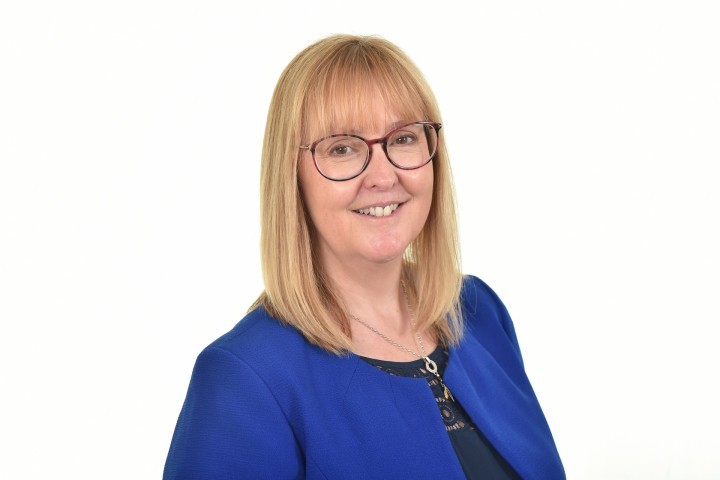
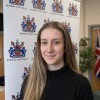
For adopted Lancastrian Dr Michele Lawty-Jones, skills development and the empowerment that can give people has been embedded since childhood through the best role model anyone can have - her mum.
Now the director of the Lancashire Skills and Employment Hub, which works with a raft of partners to support the skills agenda to promote growth and productivity throughout the county, it was those humble beginnings that instilled in Michele the drive and determination to get where she is today.
Michele grew up in Cleethorpes on the Lincolnshire coast. Dad was a lorry driver who spent long days away from home and on the road heading to Scandinavia and other far-off places. And Mum, Sheila, was a dinner lady. Until she decided to make a change.
“By the time I was about ready to go off to high school, Mum decided to go off to night school and retrain,” says Michele. “She became an office administrator and then worked her way all the way up to office manager.
“So in terms of what I am passionate about – the power of skills and what it can do in terms of mobility and employment prospects – I watched my mum go to night school. In fact, I went with her to some of them, to do Excel and stuff like that which was quite interesting. So even though I was from, I suppose, a working-class background, the aspiration and progression was there through skills.”
Early on, Michele decided she wanted to be an architect, so at sixth form she studied A-levels in maths, chemistry and art and went off to do work experience with a local architect.
Michele says: “It was a bit of a weird combination, but I really enjoyed art. And it totally put me off being an architect.
“We say at the moment that young people need to see it to be it. We have young people going out from year seven now, experiencing different workplaces and meeting different employers. Getting to know what they do like and what they don’t like. And I have that reflection of when I spent two weeks in that architect’s office, part of which was colouring in elevations of buildings, and it really didn’t get me excited about it when it could have done.”
Michele then turned down an offer from the University of York to study at what was then Lancashire Polytechnic, now better known as the University of Lancashire.
She says: “I was the first in my family to go to university and nobody understood why I wanted to come to Preston. My college tutors thought I was mad to turn down York. But I chose Preston because they had more flexibility in how you built up your credits, so I could do a mix of maths, psychology and education, which is what I wanted to do.”
Eventually majoring in psychology, Michele went to London to do her PhD and then, having been offered three very different jobs, chose to return to Lancashire at Career Link, the careers service before Connexions, to build up a business unit offering psychology and career services to adults and businesses.
“That was my Sliding Doors moment,” says Michele. “Through that I started to get more involved in the young people side as well, and supporting young people to transition into the world of work.
“And from that I started to get more excited about the policy side and drawing funding into Lancashire to support young people and adults, boost employment prospects and that kind of thing.”
From there, Michele’s role expanded. She became a partnership director and soon moved on to the North West Development Agency, which gave her the opportunity to step even further into the policy world. She led on two themes of the regional economic strategy – higher level skills and leadership and management.
She reflects: “It was great because this was in the days of the regional development agencies and there was quite a lot of money around. It’s a lot tighter now. It is quite interesting how you go through these waves.
“One of the standout moments from my time at the NWDA was that we were able to invest in leadership and management, in mentoring, and we upskilled 12,500 leaders and managers.”
One of Michele’s projects had been to bring a few different colleges together to establish the University of Cumbria, and when the NWDA closed it provided the perfect opportunity to go and work there, spending four years setting up the knowledge transfer and enterprise function, before the opportunity to set up the Skills and Employment Hub arose.
She says: “The job wasn’t just to run the Hub, it was to build it from the ground up. And that really appealed to me as I had been doing that in most of the jobs I had done before. I like coming in and developing things.
“And being able to build the team that was going to help me was just as important.”
Having initially qualified as a psychologist, Michele says her academic beginnings have proven useful throughout her career.
“The psychology side is a crosscutter, because it's all about people at the end of the day,” she says. “For us, it's about engaging Lancashire residents to boost their employment prospects. Through our programmes we work with a whole host of people, people with multiple barriers, living in disadvantaged communities, and that sort of thing.
“Psychology is a great subject for anybody because you can apply it in any walk of life. It's understanding how people tick.”
Of all the achievements since establishing the Skills Hub just over a decade ago, Michele says its evolution is the thing she is most proud of.
“Devolution around skills and employment is a huge opportunity,” she says. “In August we launched the Adult Skills Fund. That's £45m a year of skills funding now coming through Lancashire.
“We have been working really hard to stand that programme up and to ensure it is aligned with local labour market priorities. It's about getting the employer view of what the skills needs are across Lancashire, what the pressure points are, and that informs what local education providers should shape in terms of their curriculum.
“We also have Connect to Work, which was a £38m five-year programme that supported employment, enabling people with health challenges, physical and hidden disabilities, to be able to get back into the labour market, and get sustained employment.
“The Skills Hub has grown quite significantly over the past few years, but it’s all about how we collaborate that is the key for us.
“Our mantra is ‘collaboration is our superpower’, which might sound a little twee, but we are a strategic unit. We don’t deliver, we procure, we commission. So working with our provider network, working with employers, working with the business networks, how we collaborate is the key.
“Working together and helping to shape how we use the investment coming into Lancashire to better enable our businesses and to improve employment prospects of our residents, that's what's at the heart of what we are doing.”
Michele’s take on leadership
What do you think makes a good leader?
Through your career you see the good and the bad, and I think I have learned from both. Whereas some people absorb those characteristics and think that’s how they’ve got to be, and that’s absolutely not the case.
I had a female leader in my early years who I think thought she needed to adopt kind of masculine characteristics. She was tough-minded, very dogmatic and quite egotistical. And she was a bit of a nightmare, if I’m honest.
And I probably learned from her how not to do things and I didn’t absorb that into the way I approached being a leader.
To me, leadership is all about recognising the talent that you have in the team of people you're working with and playing to their talents. It's about enabling and empowering people, within parameters of course. I like to think people will reflect back to me that I help people to problem-solve. I won’t give them the answer, but I’ll give them a push in the right direction to get to a solution.
Which leaders have inspired you and why?
There's a man called David Feldman who used to run a public sector leadership programme years ago, which I went on in my early career. That really shaped my view of leadership in terms of good practice and collaboration in particular.
I always remember David's little trick at the end of a leadership course, having talked about strategy, leadership and all those big strategic subjects, and then he would light a candle. He would turn to the audience and tell them to close their eyes and use the power of everything we had learned and discussed to blow out the candle: visualise it.
Obviously nothing would happen. And the message was, you can do all the planning and strategising you want, but unless you actually do something, nothing will happen.
And that’s always resonated with me. I can talk about a strategic framework, skills and employment for Lancashire, but unless you actually make something happen, it won't make a difference.
What qualities does a leader need?
For me humility is important. Treat people how you would like to be treated yourself. Your success is your team's success, your team's success is your success, because you are in it together.
You have to follow through. If you say you are going to do something, do it. Communication is key as well. You have to be able to engage with other people. And the ability to step back, be analytical, be the problem-solver.
You have to set the vision and objectives, but it's how you actually deliver against that.
Good leaders can offer vision on objectives, but are also mindful as to whether it can actually be implemented. There's got to be some pragmatism, and realism there as well.
' fill='%23cc0935'/%3E%3C/svg%3E)
' fill='%23cc0935'/%3E%3C/svg%3E)
Enjoyed this? Read more from Dan Clough